
Related Posts
- ▶ What to Inspect in Beiyi Steel Hot Rolled Plate Packing Before Ocean Dispatch
- ▶ How Beiyi Steel Protects Hot Rolled Plates from Moisture During Ocean Shipping
- ▶ Will Transit Rust on Galvanized Steel Coil Qualify for Replacement?
- ▶ How thick should wear resistant steel plate be for abrasive service?
- ▶ How should galvanized steel coil be stored to prevent white rust?
- ▶ Steel Production Capacity Soars with Technological Advancements and Strategic Investments
Send Us A Message
How Beiyi Steel Checks Plate Processing Plans Against Project Drawings
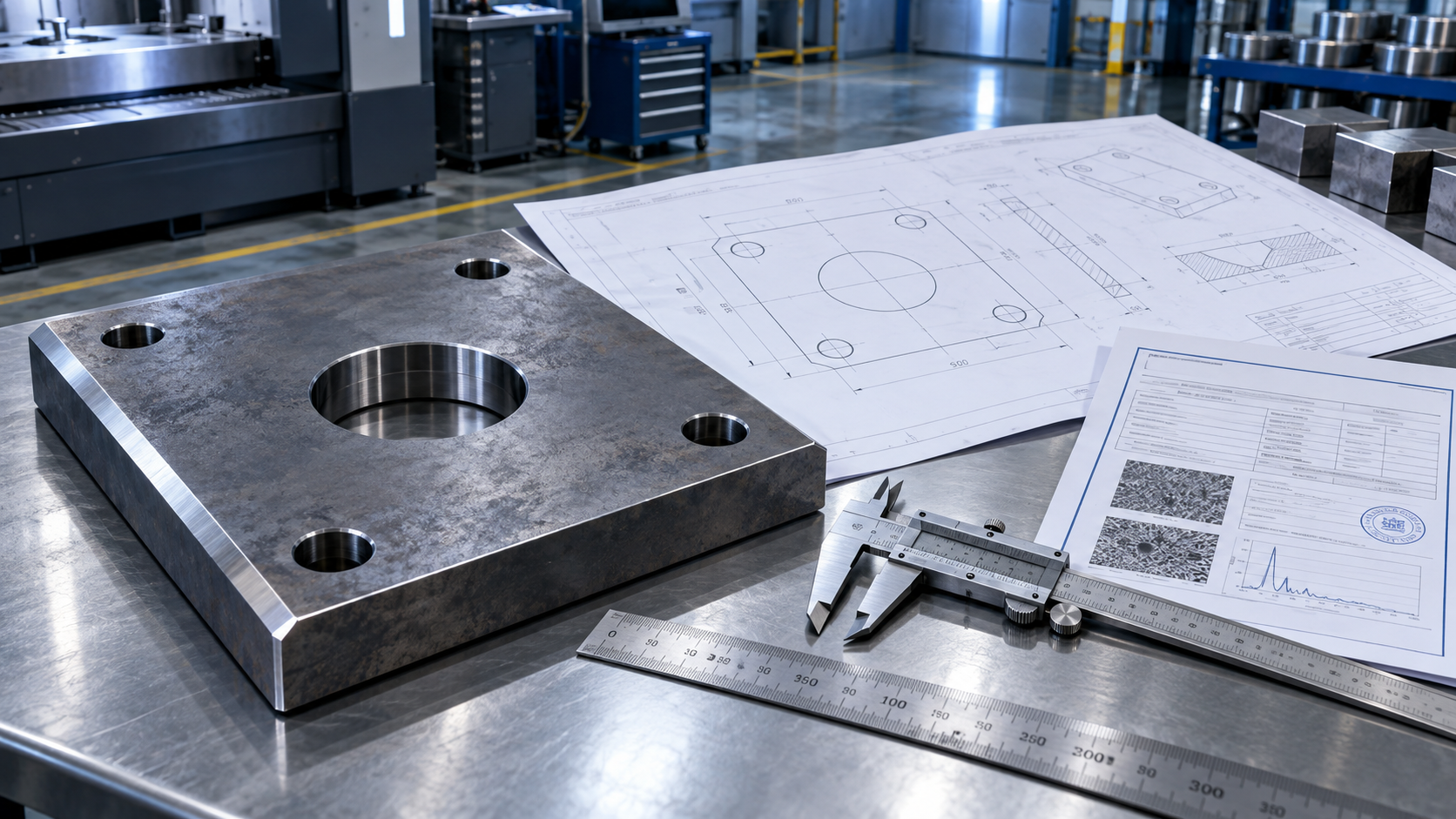
How Beiyi Steel Checks Plate Processing Plans Against Project Drawings
For procurement teams managing fabrication schedules and technical risks, a key question is: is Beiyi Steel steel plate processing plan matchable to project drawing? The practical answer is that it can be assessed systematically, but only when the drawing, material specification, processing scope, and acceptance requirements are reviewed together. A plate that looks correct on a quotation can still create costly problems if its grade, size basis, cut profile, hole location, bevel preparation, or inspection requirement has been interpreted differently by the supplier and the fabricator.
At Beiyi Steel, the review is not limited to comparing a plate thickness and overall length. The processing plan needs to be checked against the information that determines whether the delivered steel can enter the next fabrication stage without unexpected rework. This is especially relevant for project buyers sourcing cut-to-size carbon steel plate, wear-resistant plate, high-strength plate, or shipbuilding plate for structures, machinery, mining equipment, transport components, and industrial fabrication.
A drawing is a manufacturing instruction, not merely a material list. It may contain references to standards, revision notes, tolerances, weld preparations, surface conditions, datum points, and special marks that do not appear in a basic purchase description. The purpose of a drawing-to-plan review is to identify those details before steel is processed, packed, and shipped.
The starting point: establish which document controls
Many mismatches begin with a simple document-control issue. A buyer may send a drawing file, a purchase order, a material take-off, and an earlier email discussion. If dimensions or grade references differ among them, a processor cannot safely assume that the oldest or most convenient document is correct. The relevant drawing revision, issue date, and drawing number should be clear before production planning begins.
This matters because a revised drawing may change more than the outline. A small adjustment to a hole pattern can affect assembly fit-up. A change from a square edge to a prepared edge can alter both processing time and the usable plate size. A material note may also be moved from a general specification sheet to a drawing note, where it can be missed if the review is limited to the bill of materials.
A workable review therefore starts by identifying the controlling documents and asking direct questions where information conflicts. Beiyi Steel’s role as an export supplier often involves coordinating this clarification across different parties: the project buyer, the fabrication team, a third-party inspection arrangement where applicable, and the shipping side. Clear technical communication at this stage is generally more useful than trying to correct an ambiguity after cutting has started.
Checking the material requirement beyond the grade name
The first technical check is whether the specified material can be supplied in a form suitable for the drawing and its intended service. A grade designation alone may not fully define the requirement. The drawing or associated specification may call for a particular delivery condition, thickness range, testing requirement, impact-property condition, surface expectation, or traceability method. These items should be confirmed rather than inferred.
For example, a high-strength steel plate used in a load-bearing fabricated structure is not automatically interchangeable with a general carbon steel plate of similar nominal thickness. Likewise, a wear-resistant plate may meet a hardness-related requirement but still need review for its intended forming, welding, or machining route. Shipbuilding applications can bring additional drawing and documentation requirements that need to be considered against the applicable project specification. The correct approach is not to promise equivalence broadly, but to compare the stated standard and project requirement line by line where necessary.
The review normally considers:
- the specified grade and governing material standard;
- nominal thickness, width, length, and any permitted deviation;
- plate condition, such as hot rolled condition or a project-defined supply condition;
- whether material certificates, heat identification, or other traceability records are required;
- special notes affecting cutting, edge preparation, welding, bending, or later fabrication.
This is where procurement should avoid using “equivalent” as a shortcut. A proposed alternative may be technically workable in some projects, but substitution needs acceptance from the responsible engineering party. The supplier can explain available options and documentation, while approval of a material deviation belongs with the project’s designated authority.
Dimensions are not just dimensions: reading the drawing correctly
A plate processing plan must distinguish between raw plate dimensions and finished-part dimensions. If the drawing shows a finished contour, the nesting and cutting plan may require additional material around the part. If bevels, machining allowances, or later edge finishing are required, the plate blank may need to be larger than the final drawing size. Ordering only the final net dimensions without discussing the process route can leave insufficient stock for fabrication.
Beiyi Steel checks whether the plan identifies the correct dimensional reference. This includes length, width, thickness, radii, slots, cut-outs, and hole positions, but also the datum from which those features are measured. A hole pattern may be accurate in isolation but still be wrong if it is located from an opposite edge or from a different centerline than the drawing intends.
Tolerances require equally careful treatment. Buyers sometimes state “as per drawing” while the drawing gives a nominal size but no explicit tolerance for a particular feature. In that situation, the acceptable result may depend on the referenced fabrication standard, the chosen cutting process, and the final application. It is better to resolve critical tolerances before processing than to assume that a general plate tolerance covers precision-cut geometry.
Matching the processing method to the requirement
The drawing may specify the final geometry without prescribing every production method. That does not mean the method is irrelevant. Thermal cutting, drilling, machining, grinding, and edge preparation each have practical limits and different effects on the finished part. The appropriate route depends on plate grade, thickness, feature geometry, requested tolerance, downstream welding, and the buyer’s own fabrication sequence.
For a straightforward rectangular plate, a cut-to-length plan may be enough. For a component with narrow internal profiles, close-tolerance holes, or specified bevels, the plan should state more clearly what processing is included and what remains for the fabricator. This avoids an all-too-common misunderstanding: one party assumes a delivered plate is ready for assembly, while the other assumes it is only a rough-cut blank.
Edge condition deserves special attention. A project drawing may use notes such as “remove burrs,” “grind smooth,” or “prepare for welding.” These phrases should be translated into an agreed processing scope rather than treated as interchangeable. A deburred cut edge is not necessarily a machined edge, and a general edge clean-up is not necessarily a defined weld bevel. Where weld preparation is critical, the bevel detail should be readable on the drawing or confirmed separately.
Inspection points should follow the actual project risk
Inspection is most effective when it focuses on the features that could prevent acceptance or fabrication. For processed plate, this may include material identification, thickness confirmation, key outside dimensions, hole centers, profile checks, edge condition, quantity, and packing condition. The exact inspection scope should reflect the purchase order and project documentation rather than rely on a generic checklist.
A buyer should also clarify when inspection is needed. If confirmation is required before shipment, it should be built into the order and production schedule. If an independent inspection party is involved, the required documents, hold points, and release process need to be understood early. Waiting until cargo is packed can turn a simple measurement question into a shipment delay.
For export deliveries, inspection and packing are linked. Cut parts should remain identifiable through handling, bundling, and transport. Where project traceability is required, marking arrangements need to survive the practical realities of loading and unloading without damaging the material surface or obscuring critical information. Secure packing is not simply a logistics matter; it helps preserve the connection between the processed part and its supporting documentation.
Questions that prevent avoidable drawing mismatches
Before issuing a final processing instruction, procurement teams can reduce uncertainty by confirming a few specific points. Which revision of the drawing is approved for production? Are dimensions net finished sizes or cutting blank sizes? Which tolerances are critical for assembly? Does the stated grade require a particular certificate or delivery condition? Are holes, bevels, and surface finishing included in the supplier’s scope? Must each item carry a part mark, heat reference, or orientation mark?
Another useful question is whether the drawing package includes all referenced notes and detail sheets. A main drawing often points to a weld detail, material specification, or general tolerance document that is not attached to the original enquiry. Processing a plate from an incomplete drawing package may produce a part that is visually correct yet technically incomplete.
For recurring orders, retaining an approved drawing register and an agreed processing description can improve consistency. It should not replace review when revisions occur, but it gives both buyer and supplier a clearer baseline for repeat parts. This is particularly helpful for distributors and fabricators managing multiple plate items with similar dimensions but different grades, hole patterns, or marking requirements.
A practical basis for procurement decisions
Shandong Beiyi Import & Export Co., Ltd. supplies steel products to global distributors, fabricators, and project buyers, including hot rolled and carbon steel plates, wear-resistant plates, high-strength plates, shipbuilding plates, coils, pipes, and structural steel products. For plate orders involving customized dimensions or processing, the useful measure is not simply whether a supplier can quote a size. It is whether the supplied plan can be traced back to the drawing requirements and whether unclear points are raised before production.
A matchable plan is one that identifies the applicable material, uses the right drawing revision, defines the finished scope, recognizes critical tolerances, and provides a sensible basis for inspection and shipment. When those elements are visible, buyers can make a more informed decision about technical fit, fabrication readiness, and delivery risk. When they are absent, the lowest unit price may conceal the highest downstream cost.
The most reliable next step is to submit the current drawing package together with the material specification, required documentation, processing scope, and destination requirements. That gives Beiyi Steel and the buyer a practical foundation for confirming what can be supplied, what needs clarification, and which details should be agreed before the first plate is cut.
DROP A MESSAGE