
Related Posts
- ▶ What to Inspect in Beiyi Steel Hot Rolled Plate Packing Before Ocean Dispatch
- ▶ How Beiyi Steel Protects Hot Rolled Plates from Moisture During Ocean Shipping
- ▶ Will Transit Rust on Galvanized Steel Coil Qualify for Replacement?
- ▶ How thick should wear resistant steel plate be for abrasive service?
- ▶ How should galvanized steel coil be stored to prevent white rust?
- ▶ Steel Production Capacity Soars with Technological Advancements and Strategic Investments
Send Us A Message
Which Drawing Details Affect Beiyi Steel Plate Processing and Quotation Accuracy?
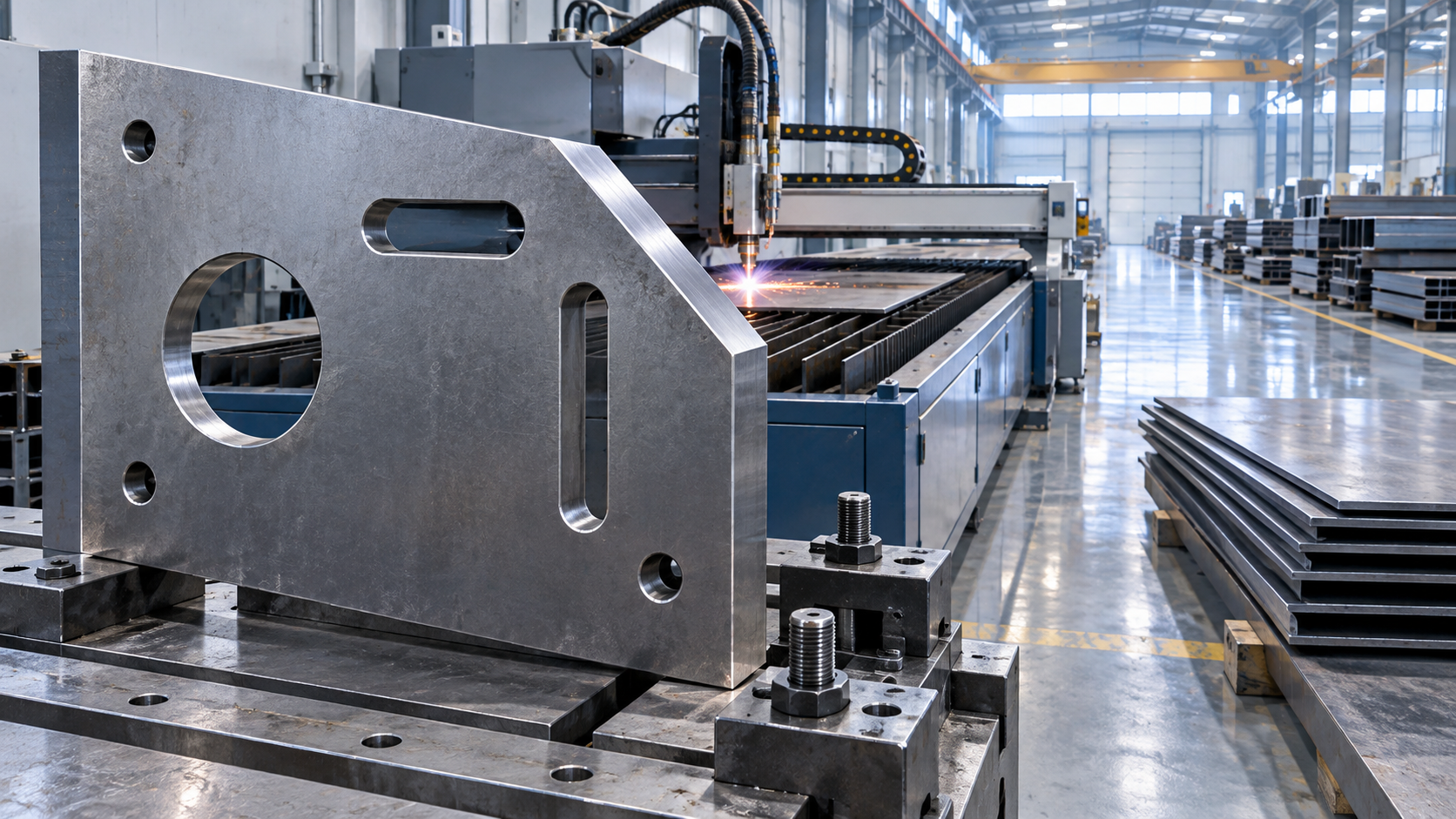
A steel plate processing plan can match a project drawing well, but only when the drawing carries enough manufacturing information to remove interpretation. For a buyer asking whether Beiyi Steel can process plates to project drawings, the practical answer is conditional: the supplier can quote and plan against the drawing, yet the accuracy of both the plan and price depends on more than the finished length and width shown on a layout.
A plate that appears simple on a general arrangement drawing may require cutting, drilling, beveling, marking, inspection, edge treatment, or a particular rolling direction. If these details are absent, the quotation may be based on assumptions. Those assumptions can later affect material yield, machine time, tolerances, packing method, lead time, and the final commercial adjustment.
For procurement teams, the objective is not to overload a drawing with notes. It is to make sure the details that change the processing route are visible before steel is allocated and work begins.
Start with the material definition, not the cutting profile
Dimensions are often the first item sent for quotation, but material selection should be equally clear. A drawing that specifies only “steel plate” leaves open questions that can materially change the sourcing plan. Grade, standard, delivery condition, thickness tolerance, and inspection requirements should be aligned across the drawing, bill of materials, and purchase specification.
This matters especially where the plate will be welded, bent, machined, exposed to wear, or used in a structural or marine environment. A nominally similar plate may differ in chemical composition, mechanical properties, through-thickness performance, ultrasonic testing requirements, or certification documents. Processing a plate accurately does not solve a mismatch between the ordered grade and the engineering requirement.
- Grade and governing standard: State the full grade designation and applicable standard rather than using a broad description such as carbon steel or high-strength steel.
- Thickness: Show nominal thickness and any project-specific tolerance restriction. Thickness affects cutting parameters, hole quality, bevel geometry, plate weight, and packing.
- Delivery condition: Where normalized, quenched and tempered, controlled-rolled, or other delivery conditions are required, include them in the purchase documentation.
- Testing and certificates: If mill test certificates, third-party inspection, ultrasonic testing, or traceability marking are required, identify this before quotation.
- Surface condition: Indicate whether mill scale is acceptable or whether the plate needs blasting, priming, coating compatibility, or a controlled surface condition.
A common commercial mistake is treating the drawing as the only source of technical truth while the material schedule carries different requirements. A supplier may quote from the drawing dimensions and source material from the schedule, but conflicting revisions create avoidable risk. Buyers should issue a controlled drawing revision together with a matching material list and identify which document governs if a discrepancy remains.
Finished dimensions alone do not show the real material requirement
The quoted plate price is influenced by the difference between finished geometry and the stock plate needed to produce it. This gap is often underestimated when a part contains angled cuts, nested shapes, long narrow members, large openings, or components that must be cut in a fixed orientation.
A rectangular 2,000 mm by 6,000 mm part is relatively straightforward to assess. A tapered plate, a ring segment, or a set of irregular profiles may consume substantially more parent material than the finished net area suggests. The supplier must consider standard mill plate sizes, trim allowance, kerf loss, nesting efficiency, handling clearance, and whether remaining material can be used elsewhere in the order.
For this reason, a credible quotation should distinguish, where relevant, between finished-piece weight and chargeable raw-material weight. The purpose is not to make pricing more complicated. It is to prevent a buyer from comparing one quote based on theoretical net weight with another based on actual stock consumption without recognizing the difference.
Drawings should clearly show the following where they apply:
- overall finished dimensions and all profile radii;
- part quantity and whether left-hand and right-hand parts are separate items;
- cutting allowances, machining allowances, or weld preparation allowances;
- permitted rotation of the component on the parent plate;
- rolling direction or grain-direction requirements;
- areas that must remain free of heat marks, temporary tabs, or lifting holes;
- identification marks required on finished pieces.
The rolling direction point deserves particular attention. If the project requires the long axis of a part to align with the rolling direction, nesting options become narrower. That may increase raw material consumption or require a larger stock plate. The restriction may be technically justified, but it should be called out early so it is included in the commercial basis.
Holes, slots, and bevels are usually where quotation accuracy changes
Many buyers assume that once a cutting profile is available in DXF or DWG format, the processing scope is fully defined. That is only partly true. A nesting file can establish the outer contour, but it may not communicate machining quality, hole tolerance, countersinks, thread requirements, bevel preparation, or edge-finish expectations.
Holes deserve their own review. Their diameter, tolerance, quantity, position tolerance, and relation to adjacent edges all affect the selected process. A hole intended for a clearance bolt connection is different from a hole that must receive a precision pin. A small hole in thick plate may require drilling rather than thermal cutting if the specified geometry and surface condition cannot be achieved by the same process used for the outer profile.
Similarly, a note such as “bevel edge” is not enough for a reliable quotation. The drawing should identify the bevel angle, root face, root gap assumption where relevant, bevel side, and whether the edge is intended for welding after thermal cutting or requires a further finishing operation. Double-V, K, Y, and other weld preparations can involve different handling and setup requirements. On complex fabricated assemblies, the reference face is also important; a bevel cut from the wrong side can make an otherwise correct plate unusable.
When these items are left to supplier interpretation, the quotation may cover only basic flame, plasma, or laser cutting. The project team may expect drilled holes, prepared weld edges, or machining-ready components. Neither side benefits from discovering that difference after material has been cut.
Tolerances need a datum and a realistic production route
Tight tolerances are not automatically a sign of better engineering. They should correspond to the function of the component and the intended fabrication method. If a plate is later welded into a large structure, a highly restrictive dimensional tolerance may add cost without improving fit-up. If it locates machinery, guides a moving assembly, or interfaces with pre-machined components, tighter control may be necessary.
The drawing should identify which dimensions are functional and where measurements are taken. A tolerance without a datum can be ambiguous on a large profile, particularly after thermal cutting. Buyers should also distinguish between tolerances for raw plate, cut part dimensions, hole locations, flatness, straightness, and machined features. These are separate conditions with different controls.
Flatness requirements require the same discipline. Thermal cutting introduces heat, and a large plate with many internal openings may respond differently from a simple rectangular blank. If flatness is critical, it should be specified at the quotation stage together with the permitted measurement method and any leveling or stress-relief expectation. Otherwise, a supplier may reasonably price standard cut-piece flatness while the buyer expects a post-processing correction operation.
Practical drawings also identify the reference edge or datum used for inspection. This is especially helpful for plates containing numerous holes or multiple bevels. It reduces the chance that components are measured from different edges by the fabricator, inspector, and supplier.
File format and revision control are commercial controls, not administrative extras
For complex parts, the most effective quotation package usually includes both a dimensioned PDF drawing and a native or exchange-format cutting file. The PDF communicates notes, tolerances, material requirements, revision status, and visual intent. The DXF or DWG file supports accurate nesting and programming. One file should not be expected to replace the other.
Before releasing an order, check that the drawing revision, file revision, bill of materials, and purchase order refer to the same issue. A revised hole pattern or changed bevel note can have a larger impact than a small dimensional change because it may alter processing equipment, material yield, and inspection needs.
Revision control becomes more important when plates are supplied for phased fabrication. A buyer may release urgent first-batch parts while later drawings remain under engineering review. In that situation, the purchase order should separate released-for-production items from quotation-only items. This prevents a supplier from cutting components to an outdated preliminary drawing simply because the order contains a broad project reference.
How to turn a drawing into a usable quotation request
A strong inquiry gives the supplier enough information to state exactly what is included. For a steel plate processing request, the package should normally contain the controlled drawing, part list, material specification, required quantities, acceptable substitutions if any, requested processing scope, inspection requirements, packing needs, and delivery destination or port.
The buyer should also ask the supplier to identify its assumptions. This is particularly useful where the drawing has incomplete tolerances, unclear edge preparation, or variable part quantities. A short assumptions list makes comparison between quotations more reliable and gives the engineering team a focused list of points to resolve before order release.
For Beiyi Steel or any plate supplier providing export processing, the most useful question is not simply whether the processing plan is matchable to the project drawing. The better question is whether every feature that affects material selection, cutting route, inspection, and shipment has been translated into the quotation scope. When that translation is clear, the supplier can plan from the drawing with fewer qualifications, and the buyer can evaluate cost and delivery on a more dependable basis.
The drawings that produce the best outcomes are not necessarily the most detailed. They are the ones that define the features that cannot safely be assumed: the correct material, the finished geometry, critical tolerances, holes and bevels, inspection expectations, and the revision authorized for production.
DROP A MESSAGE