
Related Posts
- ▶ What to Inspect in Beiyi Steel Hot Rolled Plate Packing Before Ocean Dispatch
- ▶ How Beiyi Steel Protects Hot Rolled Plates from Moisture During Ocean Shipping
- ▶ Will Transit Rust on Galvanized Steel Coil Qualify for Replacement?
- ▶ How thick should wear resistant steel plate be for abrasive service?
- ▶ How should galvanized steel coil be stored to prevent white rust?
- ▶ Steel Production Capacity Soars with Technological Advancements and Strategic Investments
Send Us A Message
What to Inspect in Beiyi Steel Hot Rolled Plate Packing Before Ocean Dispatch
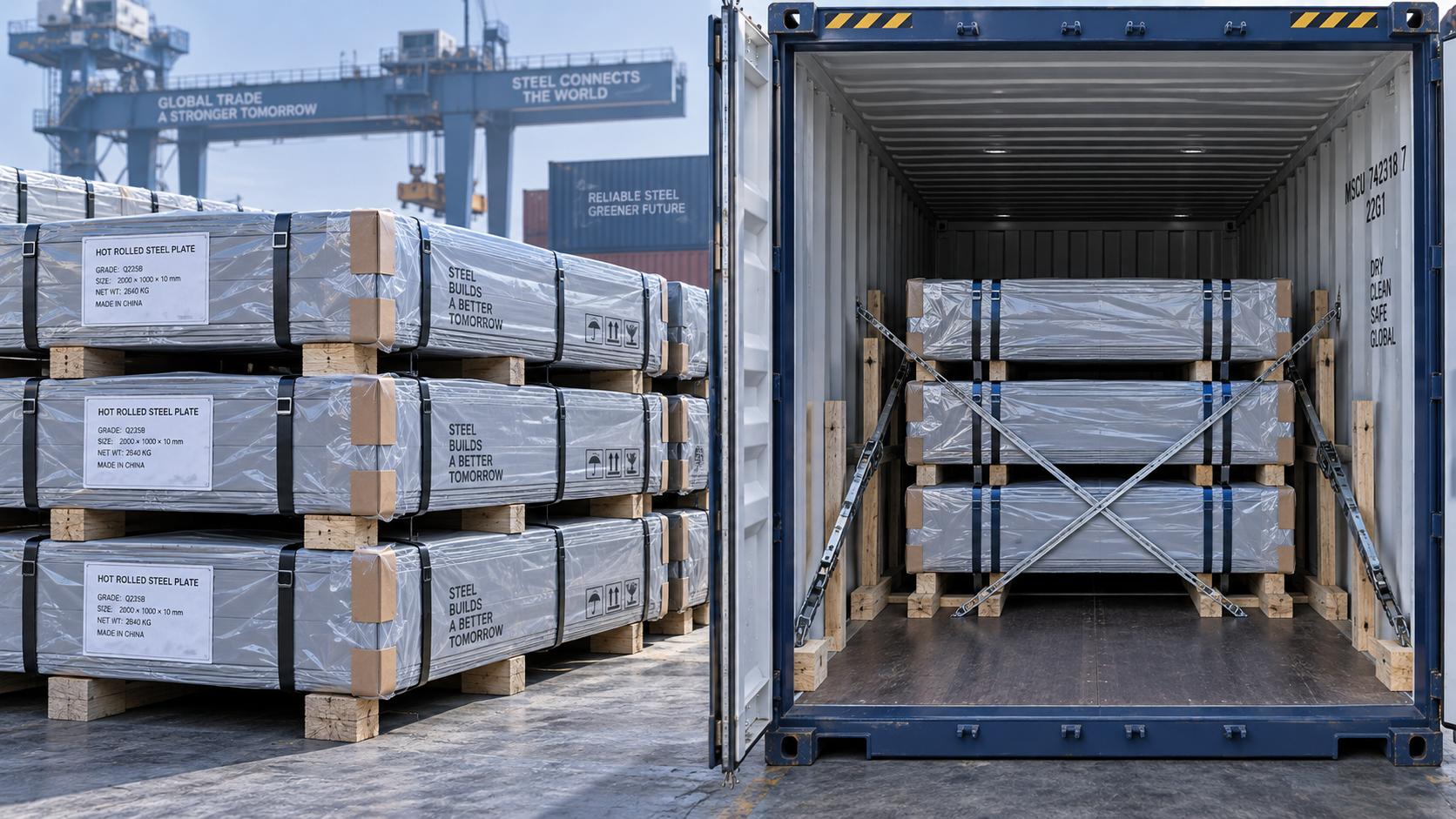
For distributors and agents sourcing steel internationally, packing is not a secondary detail to be checked after the commercial terms are settled. It is part of the product condition that reaches the destination. A hot rolled plate may leave the mill or warehouse with acceptable dimensions and surface condition, yet arrive with rust staining, bent corners, damaged edges, or unreadable markings if export packing and container preparation have been overlooked.
So, how does Beiyi Steel pack hot rolled steel plate for ocean shipment? The answer should be verified through a practical pre-dispatch inspection rather than assumed from a packing description alone. Before cargo is released to port, buyers should confirm plate identification, surface cleanliness, protective materials, moisture control, bundle security, bearing supports, lifting safety, and loading arrangements. For distributors, these checks reduce claims risk and make onward warehousing, resale, and traceability much easier.
This guide outlines the key packing checkpoints for hot rolled steel plate shipments moving by sea, with particular attention to the issues that matter to stockists, regional agents, and project-oriented buyers.
Start with the plate itself, not the outer wrapping
Ocean packing cannot correct a plate that was incorrectly selected, mixed with another grade, or released with visible damage. The inspection should therefore begin before any wrapping or bundle reinforcement makes the material difficult to access.
Check that the plate grade, dimensions, quantity, heat number or batch reference where applicable, and purchase order details correspond with the agreed packing list and mill documentation. For a distributor receiving several grades in one shipment, clear separation is particularly important. Carbon steel plate, high-strength steel plate, wear-resistant plate, and shipbuilding plate can look similar from a distance, but they may require very different handling and sales documentation after arrival.
Markings should be legible and positioned where they remain identifiable after packing. Depending on the plate format and contract requirement, this may include stencil marking, tags, labels, or bundle identification cards. A buyer should be able to trace each package to the relevant packing list line without opening every bundle in the warehouse.
It is also sensible to inspect representative plate surfaces before protective materials are applied. Hot rolled plate may show normal mill scale, but it should not be dispatched with excessive standing water, loose contamination, deep handling scars, or significant edge deformation that was not accepted in advance. If a concern is found before loading, it is generally easier to clarify than after a container has crossed an ocean.
What suitable export packing needs to protect against
Steel plates are heavy, rigid, and often less vulnerable to impact than thin coils or finished sheet. Even so, they face a particular set of risks during sea transportation. Salt-laden air, condensation inside the container, rain during terminal handling, shifting under vessel movement, and fork or crane contact can all affect the cargo.
The most common misconception is that a heavy plate does not need careful packing because “steel is strong.” In reality, the plate may survive while its commercial usability is reduced. A damaged edge can complicate laser cutting or fabrication. Surface rust can create a dispute with an end user. A missing label can turn a readily saleable stock item into material that must be quarantined until it is identified.
Effective packing should address three distinct areas:
- Product protection: limiting contact with rain, moisture, dirt, and avoidable mechanical damage.
- Load stability: preventing bundles or individual plates from moving during lifting, trucking, port handling, and sea transit.
- Traceability: keeping grade, size, quantity, and reference information available from dispatch through destination receiving.
The level of protection should be matched to the agreed product condition, plate size, shipment mode, destination climate, and expected transit duration. Bare packing may be acceptable for certain heavy industrial plates under agreed terms, while export orders requiring a cleaner delivery condition may call for more extensive wrapping and moisture barriers.
Surface protection and moisture barriers: inspect the details that are easy to miss
Before ocean dispatch, confirm whether the order requires bare plates, oiled plates, wrapped bundles, or a more specific protection method. The packing arrangement should reflect the contract, not a generic assumption.
Where wrapping is specified, the material should cover the plate stack adequately and be secured so that it does not tear or loosen during handling. Protective layers may include waterproof paper, plastic film, woven covers, or other suitable export-grade materials depending on the product and agreed packing plan. The aim is not merely to make the bundle look neat. The barrier should reduce direct exposure to moisture while allowing the package to remain secure under straps and supports.
Pay attention to open edges and damaged wrapping. Water often enters from the sides, corners, or puncture points rather than through the main protected surface. If plates are stored outdoors temporarily before stuffing, even a short rain event can create moisture between layers. Wrapping wet material tightly can trap that moisture and increase the chance of staining or corrosion during transit.
For shipments heading to humid, tropical, coastal, or long-transit destinations, moisture management deserves an additional conversation. Buyers may ask about container desiccants, dry container condition, temporary storage arrangements, and the planned timing between packing and vessel departure. These are not cosmetic questions; they address the real risk of container sweat and corrosion during temperature changes at sea.
Bundling must hold the cargo together without damaging it
Hot rolled plates are commonly supplied in bundles or stacked packages, especially where multiple pieces share the same dimensions and grade. A proper bundle should remain intact from the supplier’s yard to the consignee’s unloading area.
Inspect the number, position, and tension of steel straps or other approved securing systems. Straps should be applied in a way that prevents plates from spreading, sliding, or lifting at the ends. At the same time, excessively tight or poorly positioned straps can mark softer surfaces, damage protective wrapping, or create pressure points around the edges.
For long plates, wider bundles, or heavier packages, additional cross-strapping and reinforced arrangements may be necessary. The right configuration depends on plate dimensions, bundle weight, lifting method, and container loading plan. There is no single strap pattern that suits every order.
Edge protectors or corner guards can be useful where straps bear directly against sharp plate edges or where wrapping needs to remain intact. Their value is practical: they help distribute strap pressure and reduce the chance of cutting through the protective layer. If the order includes plates with processed edges, precision-cut dimensions, or a specified surface condition, this point becomes even more relevant.
Each bundle should have a clearly visible tag or label that can survive ordinary terminal handling. It should match the shipping documents and identify the material sufficiently for receiving staff to separate it by stock location, grade, or onward customer order.
Wooden supports and dunnage are part of safe handling
One of the most useful pre-dispatch checks is also one of the simplest: look beneath the bundle. Steel plates should not be placed directly on a wet floor, uneven surface, or container base without suitable support where dunnage is required.
Wooden supports, timber skids, or other approved dunnage create a gap beneath the cargo. This helps keep the plates away from minor floor moisture, supports forklift access when applicable, and spreads the load more evenly. The supports should be sound, sufficiently strong for the package weight, and positioned to avoid excessive bending or concentrated load on the plates.
In containerized shipments, dunnage also contributes to load distribution. A heavily concentrated plate load can place substantial stress on the container floor. The loading team should consider weight limits, floor condition, axle distribution for inland trucking, and the practical sequence of unloading at destination.
For shipments requiring wood packaging, destination-country import rules may apply. Buyers should confirm any applicable requirements for treated wood material before dispatch. It is better to address this during packing planning than to face a delay, repacking instruction, or quarantine concern after arrival.
Container inspection should happen before the plates go inside
A carefully packed bundle can still be compromised by a poor container. Before stuffing, the container should be checked for holes, damaged doors, wet flooring, strong odours, loose debris, protruding nails, previous cargo residue, and signs of leakage. The interior should be dry and reasonably clean.
Roof condition matters more than many buyers realize. Small openings or defects can allow rainwater into the container during yard storage or transit. The floor should also be inspected for dampness, because moisture beneath dunnage may migrate toward the cargo over time.
The stuffing plan should take account of the plate package dimensions and total weight. Cargo should be positioned to maintain reasonable load balance and to prevent movement. Depending on the arrangement, blocking, bracing, chocking, lashing, or other securing measures may be needed. These measures should be suitable for the cargo and container rather than added as an afterthought.
Do not treat the container as a sealed guarantee against corrosion. A closed container can experience condensation when temperatures shift between day and night or across climate zones. The objective is to load dry cargo into a dry, sound container, use appropriate protection, and minimize the conditions that allow moisture to remain trapped around the steel.
A practical dispatch checklist for distributors and agents
Before approving shipment, the buyer’s inspection team, third-party inspector, or supplier representative can use the following points as a working checklist:
- Plate grade, thickness, width, length, quantity, and order references have been checked against the packing list.
- Heat numbers, batch references, bundle tags, or other traceability marks are readable and consistent with documentation.
- Representative plate surfaces and edges have been inspected before final packing.
- Plates are dry, reasonably clean, and free from unagreed handling damage.
- Wrapping, waterproof protection, and edge protection match the agreed packing requirement.
- Straps are secure, correctly positioned, and unlikely to loosen or cut into the package during transit.
- Supports and dunnage are adequate for the bundle weight and handling method.
- The container is dry, clean, structurally sound, and appropriate for the cargo load.
- Blocking, bracing, lashing, or other load-securing measures have been applied where needed.
- Packing photos, loading photos, package counts, seal number, and shipping records are retained.
Photos are especially useful when there are several bundles, mixed sizes, or destination-side claims procedures. They do not replace physical inspection, but they create a clear record of condition at the point of dispatch. Images of bundle labels, wrapping, dunnage, container condition, loading sequence, and final door sealing can all be valuable references.
Documentation is the final layer of packing control
In international steel trade, packing quality and documentation quality are closely connected. A distributor does not only need plates that arrive intact; they need plates that can be received, identified, booked into inventory, and sold onward without unnecessary investigation.
The packing list should state the relevant package details clearly, including package numbers where used, dimensions, piece counts, gross and net weights as applicable, and product descriptions. Supporting documents may include mill test certificates, inspection records, commercial invoice details, bill of lading information, and any agreed pre-shipment inspection documents.
Where a customer requires a particular standard, grade designation, or certificate format, it should be confirmed early. A packing label that says only “steel plate” may be insufficient for a warehouse receiving multiple orders. Clear documentation reduces the chance that material is mixed, misallocated, or delayed after discharge.
How Beiyi Steel approaches ocean-shipment packing
Beiyi Steel supplies hot rolled and carbon steel plates for global distributors, fabricators, and project buyers, including customized grades, dimensions, cutting, and processing requirements. For ocean shipments, the packing approach should be aligned with the product specification, destination, handling route, and buyer’s agreed requirements.
When asking, “how does Beiyi Steel pack hot rolled steel plate for ocean shipment?”, buyers should focus on the verifiable elements: accurate plate and bundle identification, suitable surface protection, reinforced securing where required, practical supports, dry container preparation, and loading records. These are the details that help transform a shipment from a simple cargo movement into material that is ready for dependable receipt and onward distribution.
Before final dispatch, communicate any destination-specific packing expectations, warehouse unloading limitations, or document requirements. A clear discussion at this stage helps avoid the familiar and costly problem of discovering that the steel is technically correct but not packed for the way it will actually be handled. For international steel distribution, that difference matters.
DROP A MESSAGE