
Related Posts
- ▶ What to Inspect in Beiyi Steel Hot Rolled Plate Packing Before Ocean Dispatch
- ▶ How Beiyi Steel Protects Hot Rolled Plates from Moisture During Ocean Shipping
- ▶ Will Transit Rust on Galvanized Steel Coil Qualify for Replacement?
- ▶ How thick should wear resistant steel plate be for abrasive service?
- ▶ How should galvanized steel coil be stored to prevent white rust?
- ▶ Steel Production Capacity Soars with Technological Advancements and Strategic Investments
Send Us A Message
How thick should wear resistant steel plate be for abrasive service?
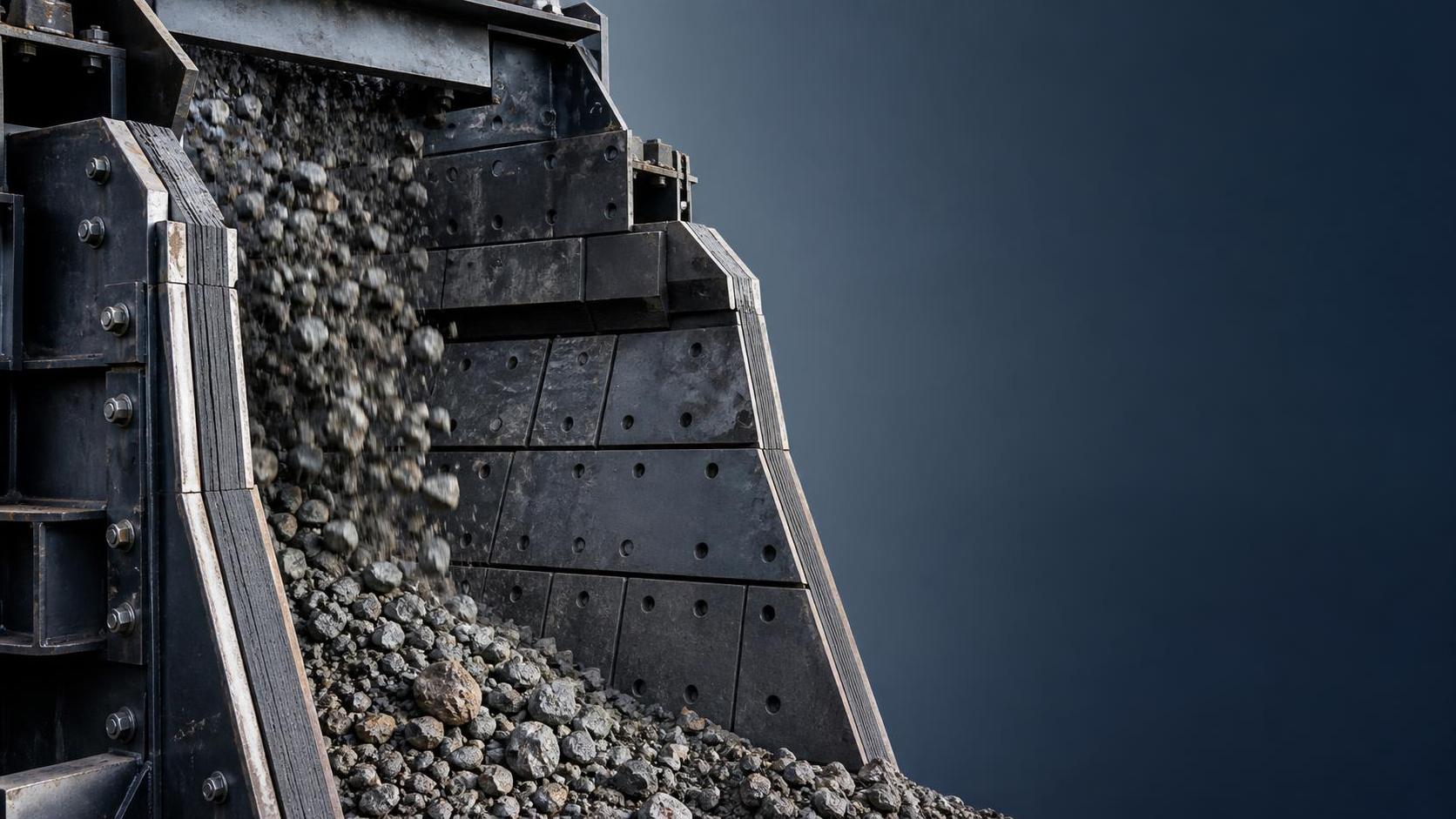
In abrasive-service projects, thickness is rarely a simple purchasing choice. A wear liner that looks economical on a quotation can become expensive once it needs to be changed during a shutdown, delays production, or exposes the parent structure beneath it. At the same time, specifying the thickest possible plate is not automatically safer. Extra thickness adds weight, can complicate forming and welding, and may be unnecessary where abrasion is mild or liner replacement is straightforward.
For project managers and engineering leaders, the practical question is not merely, “What thickness is available?” It is: What thickness of wear resistant steel plate will reach the required maintenance interval while remaining feasible to fabricate, install, and support?
There is no single thickness that suits every chute, hopper, crusher, conveyor transfer point, or truck body. However, a structured evaluation can turn an uncertain specification into a defensible engineering decision.
Start with the required service life, not the plate catalogue
The required life of a wear resistant steel plate should be tied to the operating plan. A liner in a continuously operating mineral-processing plant may need to last through a planned shutdown cycle of 12, 18, or 24 months. A replaceable liner in a small aggregate plant may only need to provide a season of reliable service. These are very different design targets.
Before choosing thickness, define the consequences of wear-out:
- How many operating hours must the component survive before planned replacement?
- Can the worn liner be changed without stopping the entire process?
- What happens if abrasion reaches the supporting shell, chute wall, or equipment frame?
- Is access limited, requiring costly confined-space work or crane time?
- Will a premature changeout disrupt a production contract or critical project milestone?
When downtime is expensive, it is usually sensible to specify enough sacrificial wear material to cover a full maintenance campaign with a reasonable safety margin. Where replacement is quick and the material stream is relatively predictable, a thinner, easier-to-handle plate may offer a better life-cycle result.
A useful thickness framework for abrasive service
The following ranges are common starting points for quenched-and-tempered wear resistant steel plate. They are not substitute values for a wear study, but they help project teams frame early discussions with fabricators and material suppliers.
These ranges describe the wear plate itself, not necessarily the full structural wall thickness. A chute may use a carbon-steel shell for structural duty, fitted with replaceable wear resistant steel plate in the zones exposed to material flow. In other applications, a thicker wear plate may serve both as the wear surface and as a structural element, but that decision requires a separate check for load, deflection, stiffener spacing, and connection design.
Wear rate matters, but it is not linear in every application
A simple first calculation is helpful: estimate the annual thickness loss, multiply it by the desired service period, then add an allowance for variability and end-of-life replacement criteria.
For example, if inspection records show that a liner loses approximately 3 mm per year and the project needs a two-year interval between shutdowns, a nominal 6 mm wear allowance may appear adequate. In practice, the plate also needs a remaining thickness that protects the supporting structure and preserves attachment integrity. A 10 mm or 12 mm plate may therefore be more realistic than a 6 mm plate.
Yet abrasion does not always remove material evenly. Wear is often concentrated at the loading edge of a chute, the lower section of a hopper, the impact zone below a conveyor discharge, or the first contact point in a crusher feed arrangement. A plate selected from average wear data can fail early at one small but aggressive location.
For this reason, separate the equipment into wear zones whenever possible. High-velocity impact areas may require 20 mm or 25 mm plate, while adjacent sliding areas can perform well with 10 mm or 12 mm. This zoned approach often controls cost and weight better than lining every surface with one heavy gauge.
Distinguish sliding abrasion from impact and gouging
Thickness selection changes significantly with the wear mechanism. Fine, dry, free-flowing material tends to create sliding abrasion. Here, surface hardness and available wear thickness are usually the primary concerns. A relatively thin, hard plate can often perform well if the plate is adequately supported and material impact is low.
Large angular rock, scrap, clinker, or ore dropped from height creates a different environment. Impact can dent the plate, crack a brittle surface, deform attachment points, or drive material into weld edges. In these conditions, the answer is not simply to choose the hardest grade available. The wear resistant steel plate needs adequate toughness, sufficient thickness, and reliable support behind it.
Gouging abrasion is especially demanding because sharp particles cut and plough the surface while impact loads repeatedly strain the plate. A thicker plate is often justified, but material flow should also be reviewed. Reducing drop height, changing chute geometry, installing a rock box, or controlling stream velocity may do more for liner life than adding several millimetres of steel.
Hardness grade and thickness must be chosen together
Wear plate is often specified by hardness class, such as 400 HBW, 450 HBW, or 500 HBW. Higher hardness generally improves resistance to sliding abrasion, but it also changes fabrication behavior and may reduce tolerance for severe impact depending on the grade and application.
A 10 mm plate in a higher hardness class is not automatically equivalent to a 16 mm plate in a lower hardness class. Thickness provides physical wear allowance and structural stiffness; hardness influences how quickly the exposed surface is removed. The right combination depends on the material handled, impact level, operating temperature, and ability to fabricate the component correctly.
For many general heavy-abrasion applications, a mid-range hardness wear resistant steel plate in a practical thickness can offer a well-balanced solution. More extreme hardness grades may be appropriate for fine, highly abrasive material with limited impact. Conversely, applications with heavy rock impact may call for a grade selected for toughness and fabrication reliability rather than maximum nominal hardness.
Check whether the plate is a liner or part of the structure
This distinction is frequently missed during early project planning. A replaceable liner is intended to wear down. It can be designed with a defined sacrificial thickness and mounted to a structural backing plate. The backing structure carries the equipment load; the liner handles abrasion.
If the wear resistant steel plate also forms the wall of a hopper, truck body, or chute, thickness must satisfy more than wear life. Engineers should consider:
- Material pressure and live load in bins or hoppers
- Plate span between stiffeners
- Deflection and vibration during loading
- Local loads at bolted connections and lifting points
- Thermal expansion where hot material is handled
- Weld design and the effect of heat input on the plate
A plate that is thick enough to resist abrasion may still be too thin to limit deflection. On the other hand, using a very thick wear plate as the sole structural wall can create unnecessary weight and difficult fabrication. A composite design—structural shell plus replaceable liner—often gives the project more control over inspection and future maintenance.
Fabrication limits can rule out an otherwise attractive thickness
Project teams sometimes specify thickness based only on service severity, then discover that the plate cannot be bent to the required radius, rolled economically, or welded using the available procedures. This is particularly important with hard wear plate.
As thickness increases, bending force rises and minimum bend radius requirements become more restrictive. Heavier plate also affects cutting time, hole-making methods, lifting plans, and transport. A 30 mm liner may provide excellent wear allowance, but it can be impractical if installers must position it manually inside a confined chute.
Attachment design deserves equal attention. Plug welds, fillet welds, countersunk bolts, stud systems, and mechanical retention each have different strengths and maintenance implications. In high-wear zones, exposed bolt heads and weld beads may wear faster than the plate itself. Where liners must be replaced regularly, standardized panel sizes and accessible fixing arrangements can save more shutdown time than a marginal increase in plate thickness.
Use material flow information to identify where thickness is truly needed
Ask for more than a description such as “iron ore,” “coal,” or “aggregate.” The abrasive behavior of bulk material depends on particle size, shape, moisture, hardness, fines content, flow rate, and drop height. A wet, sticky material may cause buildup that changes the flow path. Dry angular particles can cut aggressively. Oversize lumps may create impact damage even when the average material is relatively fine.
Useful project data includes throughput, belt speed, chute angle, transfer height, maximum lump size, operating hours, and any history of liner failures. Site photos and worn-liner samples are often more informative than a generic material name. Their wear pattern can reveal whether the problem is sliding, impact, turbulence, misalignment, or a combination of all four.
Where no history exists, consider designing the first installation for inspection. Use removable panels in the most exposed zones, establish thickness measurement points, and inspect after an early operating interval. That information supports a more precise replacement specification instead of committing the whole facility to an assumption.
A practical decision sequence for project managers
When approving a wear plate specification, work through the decision in this order:
- Set the maintenance interval. Define the minimum service life required before planned liner replacement.
- Map the wear zones. Separate impact areas, high-velocity flow paths, dead zones, and general sliding surfaces.
- Assess the material stream. Record particle size, drop height, throughput, moisture, and operating hours.
- Select the wear grade. Balance hardness, toughness, and fabrication needs instead of selecting solely by hardness number.
- Calculate sacrificial thickness. Use known wear data where available, then include a sensible reserve for local variation.
- Check structural and fabrication requirements. Confirm support spacing, bending radius, welding procedure, attachments, and installation access.
- Review the life-cycle cost. Include labor, outage duration, transport, handling, and risk to the parent structure—not just plate price.
Common specification mistakes to avoid
One common mistake is treating all equipment surfaces as equally abrasive. Uniform thickness may be easy to order, but it can overbuild low-wear sections while underprotecting the real impact zone. Another is relying on hardness alone. A very hard plate can be a poor choice if the application involves repeated heavy impact and the component lacks adequate support.
It is also risky to specify a nominal thickness without defining the minimum acceptable remaining thickness. If a liner is allowed to wear too close to its attachments or backing shell, a routine replacement can turn into structural repair. Finally, do not overlook dimensional tolerances. In tight assemblies, actual plate thickness, flatness, and the buildup from coatings or attachment details can influence fit-up.
The most defensible answer: thick enough for the service interval, no thicker than the design requires
For most abrasive-service projects, wear resistant steel plate between 10 mm and 25 mm covers a broad middle ground: moderate to heavy abrasion, manageable fabrication, and practical maintenance life. Lighter duties may work well with 6 mm to 10 mm plate, while severe crusher feed, rock impact, and highly abrasive loading zones may justify 25 mm, 30 mm, or heavier sections.
Still, thickness should be the outcome of the assessment, not the starting assumption. A successful specification considers wear rate, impact energy, plate grade, support conditions, flow geometry, maintenance strategy, and fabrication practicality together. When these factors are aligned, the selected wear resistant steel plate becomes more than a consumable surface—it becomes a planned part of equipment reliability, budget control, and project delivery.
DROP A MESSAGE