
Related Posts
- ▶ What to Inspect in Beiyi Steel Hot Rolled Plate Packing Before Ocean Dispatch
- ▶ How Beiyi Steel Protects Hot Rolled Plates from Moisture During Ocean Shipping
- ▶ Will Transit Rust on Galvanized Steel Coil Qualify for Replacement?
- ▶ How thick should wear resistant steel plate be for abrasive service?
- ▶ How should galvanized steel coil be stored to prevent white rust?
- ▶ Steel Production Capacity Soars with Technological Advancements and Strategic Investments
Send Us A Message
How should galvanized steel coil be stored to prevent white rust?
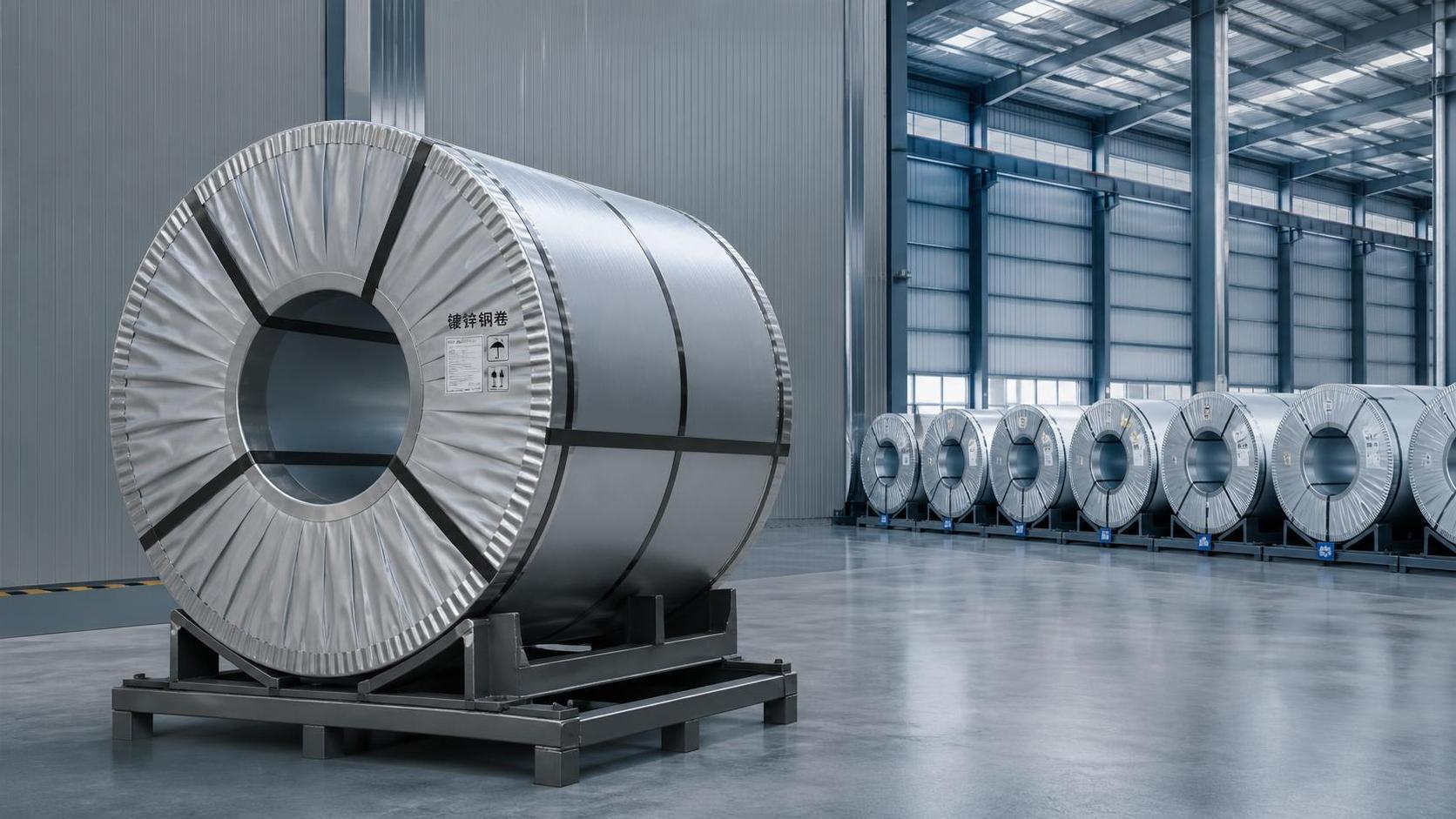
Why galvanized steel coil develops white rust in storage
A galvanized steel coil can leave the mill with a bright, clean zinc surface and still arrive at the production line marked by a chalky white deposit. In many cases, the problem did not begin during transport or fabrication. It began quietly in the warehouse, where moisture became trapped between coil laps, under packaging, or around the bore.
This deposit is commonly called white rust, although the more precise term is wet storage stain. It forms when the zinc coating remains wet or exposed to very high humidity with limited air circulation. Zinc reacts with water and oxygen, producing white or grayish corrosion products. When moisture stays confined between tightly packed surfaces, the reaction can progress before the coil has time to dry naturally.
For operators, the concern is more than appearance. Light white staining may be mainly cosmetic, but severe wet storage stain can reduce the effective zinc layer, complicate painting or coating operations, affect surface uniformity, and create avoidable rejection issues. Proper storage of galvanized steel coil is therefore not simply a warehouse housekeeping task. It is part of protecting the material’s usable surface condition.
The first rule: keep the coil dry, not just covered
Covering a coil does not automatically protect it. In fact, an improperly covered coil can be at greater risk if the cover traps condensation. A galvanized steel coil should be protected from direct rain, leaking roofs, wash-down water, snow melt, and condensation—but it also needs conditions that prevent moisture from being sealed against the zinc surface.
The safest storage environment is an enclosed, dry warehouse with a stable temperature and controlled humidity. Sudden temperature changes are especially troublesome. When a cold coil is moved into warm, humid air, moisture can condense on its surface in much the same way that water forms on a cold drink container. If the coil is wrapped tightly before that condensation evaporates, the moisture may remain inside the package for days.
Where practical, keep relative humidity at a moderate level, often below 60%, and avoid conditions where warehouse air repeatedly reaches the dew point. The exact target will depend on local climate, coil packaging, and storage duration, but consistency matters as much as the number. A dry, stable warehouse is generally safer than a space that cycles from hot and humid during the day to cool at night.
Store galvanized steel coil off the floor
Concrete floors are a frequent source of hidden moisture. Even when the surface looks dry, concrete can release moisture vapor, particularly in humid weather or in recently constructed buildings. Water can also collect in low spots, enter through loading doors, or migrate beneath pallets after cleaning.
Never place galvanized steel coil directly on the floor. Use suitable coil cradles, saddles, racks, timber dunnage, or raised supports that keep the material clear of standing water and allow routine inspection. The support system should be strong enough to prevent movement, edge damage, and coil deformation. It should also hold the coil in a stable position so that rainwater or condensation cannot pool around the outer wraps.
For coils stored with a horizontal axis, saddles should support the coil correctly and distribute the load without damaging the outer surface. For eye-to-sky storage, the bore and top surface need particular protection from dust and falling moisture. For eye-to-wall storage, operators should confirm that the coil is restrained and that the packaging remains intact. Storage orientation is not only a handling decision; it changes where water can collect and where corrosion may begin.
Control condensation during receiving and transfer
Many white rust problems begin before the coil reaches its assigned storage location. A delivery may arrive from a cold outdoor environment, a coastal port, or an unheated truck. Bringing it immediately into a warmer warehouse can create condensation beneath the wrapping.
When a temperature difference is significant, allow the galvanized steel coil to acclimatize in a dry, protected receiving area before opening or rewrapping it. The goal is to avoid exposing a cold metal surface to moisture-laden air. Operators should not assume that packaging is dry merely because the outside of the package looks clean.
Check incoming coils for signs of wet transport conditions: damaged wrapping, water stains on paper or plastic, softened edge protectors, rust-colored marks from adjacent steel components, or visible moisture near the bore. If a coil arrives wet, isolate it from dry inventory. Remove wet external packaging carefully, promote drying with clean air circulation, and inspect the surface before returning it to normal storage. Rewrapping a wet coil without correcting the cause only hides the problem.
Packaging should shed water without trapping it
Galvanized steel coil packaging is designed to provide protection during handling and transport, but its effectiveness depends on condition and use. Damaged metal covers, torn plastic film, loose straps, and wet protective paper can all create pathways for water. Once moisture enters, a tight barrier layer may prevent evaporation.
For indoor storage, retain sound mill packaging as long as it remains dry and intact. If additional protection is needed, use materials that are clean, dry, and appropriate for metal storage. Avoid wrapping a coil in non-breathable plastic when there is any possibility that the coil, paper, or surrounding air contains moisture. Plastic can be useful as an outer weather barrier during short-term transport, but it is not a cure for damp storage conditions.
Protective covers should be arranged so that water runs away from the coil rather than collecting on a flat surface or draining into the eye. If coils are temporarily staged near loading doors, use a cover that shields them from weather while allowing moisture management and inspection. Wet covers, wet cardboard, and saturated wooden supports should be replaced promptly.
Warehouse layout matters more than it seems
A well-run coil storage area makes moisture risks visible. A crowded warehouse often creates the opposite condition: coils are placed too close to exterior walls, directly below roof joints, beside open doors, or behind stock that prevents inspection. By the time a damaged wrapper is noticed, the white rust may already be established.
Keep galvanized coils away from roof leaks, wall condensation, steam lines, chemical wash areas, and unprotected doorways. Do not store them where forklifts frequently track rainwater or snow melt into the building. Good drainage around loading bays is just as important as clean aisles inside the warehouse.
Allow enough space between stacks and rows for air movement, safe lifting, and visual checks. The objective is not to create a draft across every coil; uncontrolled outdoor air can bring humidity. Rather, the warehouse should avoid stagnant, damp pockets where condensation persists. Mechanical ventilation or dehumidification may be necessary in coastal, tropical, monsoon, or seasonally humid locations.
Inventory rotation also deserves attention. Coils that remain untouched for months are harder to monitor and more likely to sit through changing weather conditions. Apply first-in, first-out practices where material specifications permit. Clearly identify the receiving date, storage location, coating condition, and any inspection notes so older stock is not forgotten behind newer deliveries.
A practical inspection routine for operators
White rust prevention works best when it is part of daily material handling rather than an emergency response. The inspection does not need to be complicated, but it should be consistent.
- At receiving: inspect the truck, packaging, coil edges, bore area, and supports for water exposure or physical damage.
- Before put-away: confirm that the chosen rack or saddle is dry, clean, and not located beneath a leak or condensation point.
- During storage: look for torn wrappers, damp paper, water droplets, discoloration around edges, and standing water near supports.
- Before processing: inspect the outer wraps and accessible inner areas. Do not send a visibly wet coil directly to slitting, roll forming, or painting without evaluation.
- After a weather event: check areas near doors, roof lines, exterior walls, and low floor locations even if no water damage is immediately obvious.
It is useful to document recurring conditions. If the same rack position repeatedly produces damp packaging, the issue may be a roof leak, floor moisture, air-conditioning discharge, or a local temperature difference. Replacing affected material without addressing that pattern wastes time and inventory.
What to do if moisture is found
Speed matters. If water is discovered on or around a galvanized steel coil, move the material to a dry area if it can be done safely. Do not leave it sealed in wet packaging. Carefully remove or open the moisture-retaining layers as needed, taking care not to damage the edges or disturb coil stability.
Dry the coil using clean, dry airflow. Gentle circulation is usually preferable to applying uncontrolled heat. Excessive or uneven heating can create its own condensation cycle when the material cools, and it may affect adjacent packaging or protective treatments. The aim is to eliminate trapped moisture, not simply dry the outermost wrap.
Once the coil is dry, assess the surface. A light, thin white film may be removable or acceptable depending on the final application, but that decision should be based on the customer’s surface requirements and the intended process. Material for visible architectural surfaces, painting, precision coating, or demanding forming operations may require closer evaluation than material for less appearance-sensitive applications.
If the stain is heavy, powdery, widespread, or accompanied by dark gray areas, avoid assuming it is only cosmetic. Report the condition according to site quality procedures and determine whether cleaning, reprocessing, downgraded use, or rejection is appropriate. Abrasive cleaning without guidance can remove zinc along with the corrosion product.
Common storage mistakes that lead to white rust
One common mistake is believing that galvanized steel is immune to corrosion. Zinc provides sacrificial protection to the steel substrate, but fresh zinc can still react in wet, poorly ventilated conditions. Galvanizing reduces risk; it does not remove the need for dry storage.
Another error is stacking a wet coil with dry coils because the visible water seems minor. Moisture can transfer through packaging, supports, or direct contact. Isolation is a simple precaution that prevents a localized issue from becoming a larger inventory problem.
Operators also sometimes place coils under plastic sheets after rain exposure. This may stop additional water from falling onto the material, but unless the coil is already dry, the plastic can trap the moisture that causes wet storage stain. Cover first only when the surface and packaging are dry, or use a temporary arrangement that permits drying while protecting against further weather.
Finally, do not overlook handling equipment. Wet lifting straps, damp coil tongs, dirty cradles, and outdoor forklifts can introduce moisture or contaminants to an otherwise dry coil. Equipment used for galvanized steel coil handling should be inspected and kept dry, particularly after outdoor work.
Storage conditions should match the planned holding time
A coil scheduled for processing tomorrow can tolerate a different level of operational exposure than one intended for long-term inventory. Short staging periods still require weather protection, but extended storage calls for more disciplined environmental control, regular inspections, intact packaging, and clear stock rotation.
When long storage is unavoidable, review the coil’s protective treatment, packaging condition, warehouse humidity, and inspection frequency before placing it in reserve. Some galvanized products may have passivation or other surface treatments that improve resistance to handling marks and moisture exposure, but these treatments should not be treated as permission to store coils in damp conditions.
The most reliable approach is straightforward: keep the galvanized steel coil dry, elevated, protected from leaks and condensation, and accessible for inspection. White rust rarely appears without warning conditions. By controlling water, temperature changes, packaging integrity, and warehouse discipline, operators can preserve the zinc surface and ensure the coil is ready when production needs it.
DROP A MESSAGE