
Related Posts
- ▶ What to Inspect in Beiyi Steel Hot Rolled Plate Packing Before Ocean Dispatch
- ▶ How Beiyi Steel Protects Hot Rolled Plates from Moisture During Ocean Shipping
- ▶ Will Transit Rust on Galvanized Steel Coil Qualify for Replacement?
- ▶ How thick should wear resistant steel plate be for abrasive service?
- ▶ How should galvanized steel coil be stored to prevent white rust?
- ▶ Steel Production Capacity Soars with Technological Advancements and Strategic Investments
Send Us A Message
How Beiyi Steel Protects Hot Rolled Plates from Moisture During Ocean Shipping
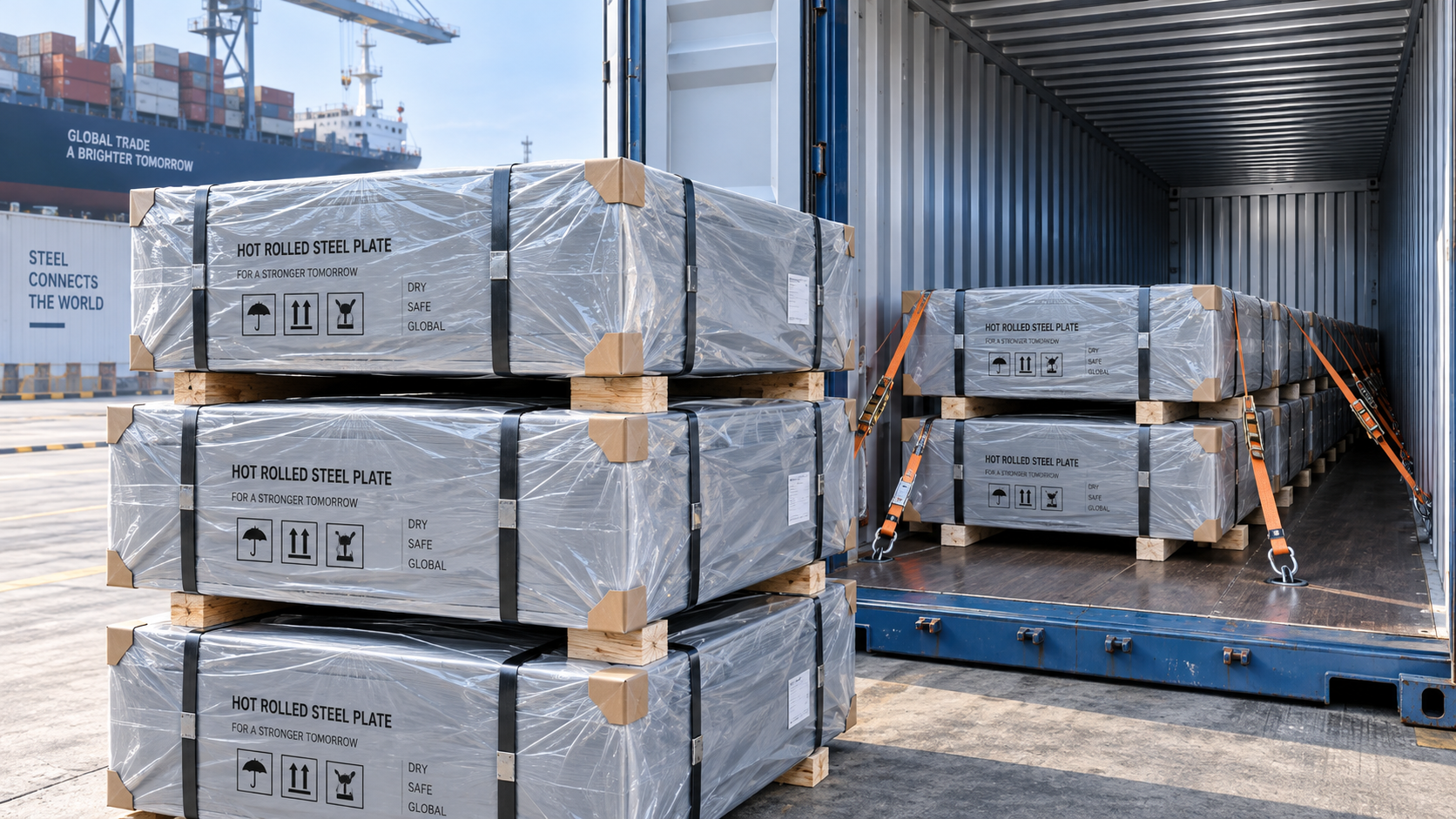
Moisture damage to hot rolled steel plate rarely comes from rain alone. During ocean shipping, the more persistent risk is condensation: humid air trapped in a container cools, water forms on the roof or packaging, and droplets reach exposed steel. Salt-laden air, delays at port, damaged wrapping, and poor container condition can turn a small packing weakness into rust staining, edge corrosion, or a cargo claim.
So, how does Beiyi Steel pack hot rolled steel plate for ocean shipment? The packing approach is built around several connected controls: confirming plate condition before packing, separating steel from direct moisture exposure, using moisture-resistant wrapping and edge protection, securing the bundle against movement, and loading it into a dry, suitable container. No single layer of packaging can compensate for a weak loading plan or a wet container. The protection works when each stage supports the next.
Protection starts before the plate is wrapped
Hot rolled plate normally has mill scale on its surface. This can provide limited resistance in ordinary storage, but it should not be treated as corrosion-proof protection. If moisture remains on the plate for a long period, particularly where plates contact one another or where water collects at edges, staining and corrosion may develop beneath or around the scale.
Before export packing, the practical first step is to check that the plates are dry and reasonably clean. Surface water, loose debris, metal fines, or wet wooden contact materials should not be enclosed inside a bundle. Once moisture is trapped under a sealed cover, the package may look intact while corrosion continues during transit.
This point matters most when material has moved between outdoor storage, processing, and container loading. A plate that appears dry in warm air can still carry condensation after a temperature change. For this reason, packing should follow a condition check rather than being treated as a purely cosmetic final operation.
What a moisture-resistant plate package needs to do
Export packing for hot rolled steel plate has two jobs that must be balanced. It must reduce contact with moisture, and it must keep the plates stable enough that the protective materials are not torn during handling and sea transport. Thin wrapping without adequate reinforcement may protect the surface at the warehouse but fail at the corner of a bundle during lifting or lashing.
Beiyi Steel uses practical export packing measures selected around plate dimensions, bundle weight, destination conditions, and the agreed shipment method. The exact arrangement can vary, but the protective logic remains consistent.
Why wrapping must cover more than the top surface
A common assumption is that covering the top of a steel bundle is enough because water falls from above. In container shipping, moisture can reach the cargo from several directions. Condensation may run down container walls, enter through a damaged side seam, or accumulate near the floor. Humid air also enters any gap left around an incompletely wrapped bundle.
For that reason, protective wrapping should enclose the plate bundle rather than act as a loose top sheet. The ends and sides require attention because they are exposed to handling damage and are often where wrapping opens first. The lower part of the bundle also needs separation from any potential wet surface. Proper supports help keep the steel off the container floor and create a stable base for handling.
The wrapping material is not a substitute for weatherproof storage after discharge. It is a transport barrier. If plates will wait outdoors at the destination, the receiving party should have a plan for covered unloading and storage. Otherwise, a sound ocean-shipping package may be opened and then exposed to rain or condensation before inspection is complete.
Edges, corners, and straps are the usual weak points
Plate edges are sharp, heavy, and exposed. During forklift handling, crane lifting, truck movement, or container loading, pressure at these points can cut an outer cover. The same issue can occur where steel straps tighten directly against wrapping. Once a tear develops, vibration can enlarge it over a long voyage.
Reinforced edge and corner protection is therefore more than an appearance detail. It helps the outer barrier survive mechanical stress. This is particularly useful for bundles with heavier plates, narrower package footprints, long transit routes, multiple transshipment points, or destination handling that involves several lifts.
Strapping should hold the bundle firmly without distorting the plates or damaging the protective layers. There is no universal strap arrangement that fits every order. A bundle of relatively short, thick plates behaves differently from long plates with a smaller thickness, and mixed plate sizes can create unstable support points. Where cutting or custom dimensions are ordered, the packing plan should be reviewed against the actual bundle geometry rather than copied from a standard arrangement.
Container condition is part of the corrosion-control system
Even well-wrapped steel can be damaged in an unsuitable container. A container with standing water, a leaking roof, damaged door seals, strong odor from previous cargo, or wet flooring creates avoidable risk. Moisture protection should therefore include a pre-loading container inspection focused on dryness, cleanliness, structural condition, and obvious sources of water ingress.
Container loading also affects how moisture behaves. Steel should be positioned on suitable supports and loaded so that bundles cannot slide, tip, or rub against each other. Secure lashing reduces the chance that movement will crush edge protectors or tear wrapping. Cargo should not be packed against a visibly wet surface, and drainage paths should not be blocked by loose material.
For routes involving substantial temperature changes, container condensation deserves special attention. The risk is higher when warm, humid air is enclosed with steel and then exposed to cooler conditions. A buyer concerned about this should discuss the route, season, expected port dwell time, and container type before shipment. The useful question is not simply whether the cargo will travel by sea, but how long it may remain enclosed under changing temperatures.
Packaging level should match the commercial risk
Not every hot rolled plate order needs the same packing specification. A nearby port shipment with prompt indoor unloading may need a different level of protection than a long route with transshipment, uncertain discharge timing, and temporary storage at destination. Packing should be proportionate to the exposure, but it should not be reduced merely because hot rolled plate is considered a basic industrial material.
Higher attention is generally justified when plates are intended for visible fabricated parts, laser cutting, precision processing, or resale in condition-sensitive markets. Surface staining may not always affect structural use, but it can increase cleaning work, disrupt fabrication schedules, and create disagreement over condition at arrival. Buyers should also consider whether the plate grade, thickness, and final application make edge condition especially important.
Shandong Beiyi Import & Export Co., Ltd. supplies hot rolled and carbon steel plates alongside wear resistant, high strength, shipbuilding, and other steel products for export markets. For plate orders, clear communication on dimensions, processing requirements, inspection expectations, packing, and shipment conditions helps align the protection method with the actual cargo risk.
Information to confirm before the order is released
The most useful packing instructions are specific enough to be checked but flexible enough to suit the final bundle arrangement. A vague request for “export packing” can lead to different expectations between buyer, supplier, forwarder, and receiving warehouse.
- State whether the plates will move in a container, by breakbulk shipment, or through another transport arrangement.
- Confirm plate size, thickness range, quantity per bundle, and whether mixed sizes are acceptable.
- Specify that moisture-resistant wrapping, reinforced edge protection, and secure strapping are required where applicable.
- Identify any condition-sensitive use, such as exposed fabrication, resale, machining, or coated downstream products.
- Request that the container be dry, clean, and suitable before loading.
- Agree on loading and packing photos when visual confirmation is needed for receiving inspection or claim documentation.
- Clarify who is responsible for unloading, indoor storage, and condition inspection after arrival.
Photos can be especially useful because they show the condition of the package before the container doors are closed: full coverage of wrapping, edge protection placement, bundle labels, support arrangement, and lashing. They do not replace proper packing, but they make the shipment condition easier to trace if a problem is reported later.
Do not confuse transport packing with long-term corrosion protection
Moisture-resistant wrapping is intended to protect hot rolled plates through the agreed logistics chain. It does not convert ordinary carbon steel into permanently corrosion-resistant stock. If plates are stored for an extended period after arrival, exposed to a humid workshop, or placed outdoors without protection, corrosion can still occur after the shipment has been properly delivered.
Where long storage is expected, the receiving plan should cover sheltered storage, separation from ground moisture, airflow management, and regular checks of packaging condition. Opening a bundle to inspect the plates and then leaving it partially rewrapped in a damp location can create more risk than keeping it intact until use.
The practical standard is simple: protect dry steel with intact materials, prevent mechanical damage to the package, use a dry and properly secured container, and preserve that protection until the cargo is received into suitable storage. When these conditions are specified clearly, ocean shipment packing becomes a controlled part of steel procurement rather than an afterthought when corrosion is already visible.
DROP A MESSAGE