
Related Posts
- ▶ How thick should wear resistant steel plate be for abrasive service?
- ▶ How should galvanized steel coil be stored to prevent white rust?
- ▶ Steel Production Capacity Soars with Technological Advancements and Strategic Investments
- ▶ The ultra-low emission transformation of the steel industry has achieved remarkable results
- ▶ Innovation Drives Forward the Steel Industry into a New Era
- ▶ Global Sales Network
Send Us A Message
What makes high strength steel plate suitable for welded structures?
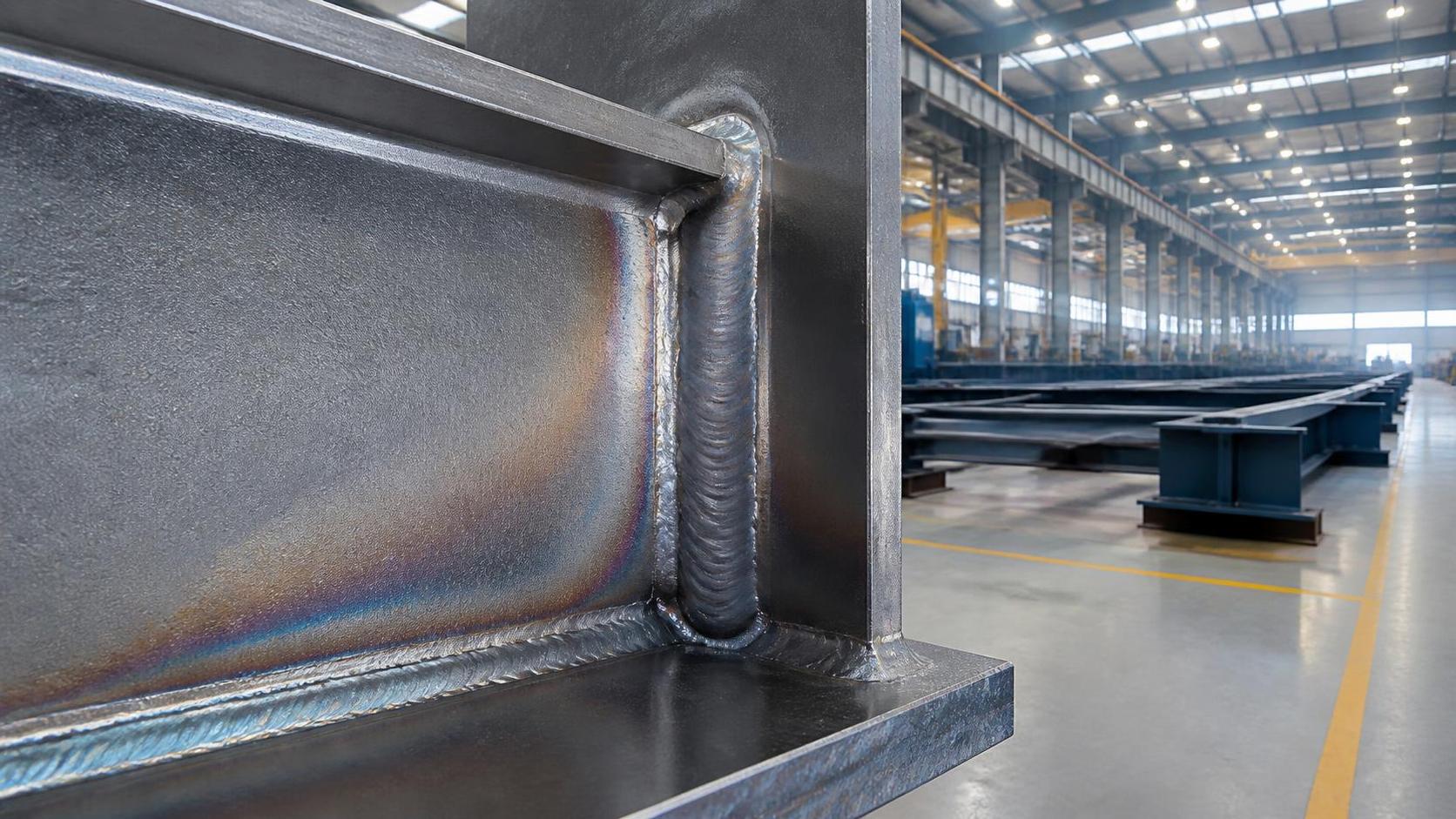
In a welded crane boom, bridge girder, mining body, offshore support frame, or heavy transport chassis, the plate is not simply carrying load. It is part of a system shaped by cutting, forming, welding heat, residual stress, inspection, and years of cyclic service. That is why a technical evaluation of high strength steel plate cannot stop at yield strength or tensile strength.
A plate may look impressive on a mill certificate yet prove difficult to weld consistently in production. Another grade may offer slightly lower nominal strength but deliver a safer, more economical structure because it has better toughness, lower carbon equivalent, and a more forgiving response in the heat-affected zone. The right choice is the plate that retains dependable structural behavior after welding—not merely the one with the highest numbers in the catalogue.
For welded structures, suitability comes from a balance of strength, weldability, toughness, thickness capability, and process control. Understanding how these factors interact helps evaluators avoid a common and expensive mistake: specifying a stronger plate without accounting for the welding conditions that will determine its real-world performance.
Strength matters, but usable strength matters more
The main reason to consider high strength steel plate is straightforward: higher yield strength permits a designer to carry the same load with less material, or to increase load capacity without proportionally increasing structural weight. Weight reduction can improve payload, reduce fuel or energy use, lower lifting demands during assembly, and make large fabricated components easier to handle.
However, welded structures are governed by more than the base metal’s yield point. Design details, weld geometry, local stress concentration, fatigue loading, and properties near the weld can all control performance. A plate with high yield strength only creates value when that strength can be used reliably across the fabricated component.
This is especially important in structures with long welds, intersecting stiffeners, attachment brackets, and highly restrained joints. These details may introduce local stresses well above the average stress calculated for a broad plate section. In such applications, a technical evaluator should ask: will the selected material maintain adequate ductility and fracture resistance after the fabrication route is applied?
The heat-affected zone is where the material decision is tested
Welding changes the steel beside the weld even when the weld metal itself is sound. The region affected by the thermal cycle, known as the heat-affected zone (HAZ), may experience microstructural changes that influence hardness, toughness, strength, and crack sensitivity. For high strength steel, HAZ behavior is often the defining issue in material selection.
A suitable plate chemistry and manufacturing route are designed to support controlled HAZ properties. Depending on the grade and thickness, this may involve low-carbon steelmaking, carefully managed alloy additions, fine-grain practice, and thermomechanical rolling or quenching and tempering. These approaches are not interchangeable. They influence how the steel responds when it is rapidly heated and cooled during welding.
The concern is not that every high-strength grade becomes brittle beside a weld. The concern is that an unsuitable combination of plate, heat input, consumable, and cooling rate can produce excessive HAZ hardness or reduced toughness. These conditions raise the risk of hydrogen-assisted cold cracking, particularly in thick plate, highly restrained assemblies, or low-temperature fabrication environments.
For this reason, the welding procedure qualification should be treated as part of the material evaluation. A plate is not fully “weldable” in isolation. It is weldable within a defined range of joint design, process, heat input, preheat, interpass temperature, consumables, and environmental controls.
Carbon equivalent offers an early indication of weldability
Technical teams often use carbon equivalent (CE) as an initial indicator of a steel’s hardenability and its potential sensitivity to hydrogen cracking. Although calculation methods differ by standard and material family, the principle is consistent: carbon and certain alloying elements can make the weld-adjacent area more likely to form hard, crack-prone microstructures when cooling is rapid.
A lower carbon equivalent generally gives more flexibility during welding. It can reduce the preheat required, widen the acceptable heat-input range, and make consistent fabrication easier in the field or in high-throughput workshops. That does not mean CE alone should dictate the decision. Two plates with similar carbon equivalent values may behave differently because of thickness, delivery condition, cleanliness, grain refinement practice, and actual chemical balance.
Still, CE is a useful screening tool. When comparing high strength steel plate options, request the relevant chemical composition limits and, where available, actual cast analysis information. Review these alongside plate thickness and the intended welding process. A low CE is particularly valuable where joints are restrained, access is limited, or site conditions make strict thermal control difficult.
Thickness changes the welding equation
It is tempting to qualify a grade based on successful welding of a relatively thin sample and assume the result applies across the full thickness range. In practice, thickness has a major effect on cooling rate, restraint, through-thickness stress, and preheating needs.
Thicker plate draws heat away from the weld more rapidly. This can promote a harder HAZ if heat input and preheat are not adjusted. At the same time, heavy sections often occur in large, rigid fabrications where weld shrinkage is constrained. The combination of high restraint, diffusible hydrogen, and susceptible microstructure is a classic setting for delayed cracking.
Selection should therefore be thickness-specific. The grade, delivery condition, and plate thickness on the purchase order should match the qualified welding procedure. If a structure will use several thicknesses, do not assume one WPS covers all of them without checking its qualification range and the applicable code requirements.
Through-thickness properties deserve attention in restrained joints
Some welded details impose strain through the plate thickness rather than primarily along its rolling direction. Examples include T-joints with heavy fillet welds, welded attachments on thick plate, and multi-directional nodes in complex structures. In these situations, lamellar tearing can occur if non-metallic inclusions and through-thickness ductility are not adequately controlled.
Where the design creates significant through-thickness strain, evaluators may need to consider plate with specified through-thickness reduction-of-area properties, often referred to as Z-direction or Z-quality performance. Joint redesign, buttering layers, weld sequencing, and lower-restraint details may also help. The key point is that a standard tensile test taken along the rolling direction does not reveal every risk in a welded assembly.
Toughness protects the structure when conditions are less than ideal
Strength describes resistance to permanent deformation; toughness describes the ability to absorb energy and resist brittle fracture. A welded structure can be exposed to low ambient temperatures, dynamic loading, impact, stress concentrations, or flaws that are too small to be visible in routine service. Toughness provides a vital margin under those conditions.
Charpy V-notch impact testing is commonly used to assess notch toughness at specified temperatures. The required test temperature should reflect the lowest credible service temperature, the governing design standard, plate thickness, stress level, and consequence of failure. A plate intended for indoor equipment in a mild climate may need a different toughness profile from plate used in exposed lifting equipment, cold-region transport, or offshore structures.
Welded construction makes this discussion more demanding because toughness is not limited to the parent plate. The weld metal and HAZ must also satisfy the applicable requirements. Consumable selection, heat input, interpass temperature, and welding sequence all affect the resulting properties. A strong plate paired with an unsuitable consumable system can create an uneven joint in which the weakest or least tough region governs.
Controlled rolling and heat treatment influence fabrication performance
Not all high strength steel plate achieves its strength in the same way. Some grades are thermomechanically rolled, using controlled deformation and cooling to produce a fine-grained microstructure. Others are quenched and tempered, a route that can provide very high strength levels with carefully developed toughness. Normalized or normalized-rolled grades may be selected where predictable properties and conventional fabrication behavior are priorities.
The delivery condition affects more than strength. It can influence forming limits, stress-relief considerations, HAZ response, and allowable post-weld heat treatment. A quenched and tempered plate, for example, should not automatically be subjected to any stress-relief cycle without confirming that the temperature and duration will not reduce its mechanical properties. Similarly, thermal cutting and hot forming conditions must be compatible with the supplier’s guidance for the specific grade.
A practical evaluation asks how the entire fabrication sequence will interact with the plate: storage, cutting, edge preparation, bending, fit-up, welding, repair welding, inspection, and any thermal treatment after welding. The best material choice is usually the one that fits this sequence with the fewest special controls while still meeting structural requirements.
A welding-friendly grade reduces risk, not the need for discipline
Even a readily weldable high strength steel plate requires sound workshop practice. Hydrogen control is central. Low-hydrogen consumables must be stored, conditioned, and handled correctly. Surfaces should be dry and free from oil, paint, scale, and moisture. Welders need access to the specified preheat and interpass temperature range, and the fabrication team must understand when those controls apply.
Heat input must also be managed rather than simply maximized for productivity. Too little heat input may produce rapid cooling and elevated HAZ hardness. Excessive heat input can coarsen grain structure, reduce toughness, distort thin sections, or soften certain high-strength steels. The acceptable window should come from the qualified procedure and material-specific recommendations, not from habits developed on lower-strength structural grades.
Joint preparation deserves equal respect. Poor fit-up increases restraint and encourages unnecessary weld volume. Undercuts, abrupt weld profiles, overlap, and poorly finished transitions can become fatigue initiation points. In cyclically loaded structures, careful weld detailing and finishing may have as much influence on fatigue life as an incremental increase in plate strength.
How to compare plate options during technical evaluation
Rather than starting with a preferred grade name, begin with the design and fabrication envelope. The following comparison framework keeps the decision connected to the actual welded structure.
Common selection errors that create avoidable welding problems
Choosing only by nominal yield strength. Higher strength may reduce thickness, but it can also introduce tighter welding controls, more demanding consumables, and more limited forming options. Evaluate the fabrication cost and risk alongside weight savings.
Using generic preheat rules. Preheat depends on steel chemistry, plate thickness, heat input, hydrogen level, joint restraint, and ambient conditions. A blanket temperature may be either insufficient or unnecessarily costly.
Ignoring repair welding. Repairs are often more restrained than production welds and may involve local thermal cycles that differ from the original procedure. The material and WPS strategy should address likely repair scenarios.
Assuming base-metal certificates qualify the joint. Mill test data confirms plate properties in the supplied condition. It does not prove HAZ toughness, weld-metal properties, or resistance to hydrogen cracking in a particular fabrication.
Overlooking availability in the required condition. A specification should state the needed thickness, delivery condition, toughness temperature, dimensional tolerances, and any through-thickness requirement clearly. Ambiguity at procurement can lead to a plate that meets a broad grade designation but is poorly matched to the project.
The decision should end with a qualified fabrication route
High strength steel plate is suitable for welded structures when its properties support the full journey from design calculation to final inspection. High yield strength provides the opportunity for lighter, stronger structures. Low-carbon, controlled chemistry and an appropriate carbon equivalent support weldability. Reliable HAZ behavior and adequate toughness protect the joint under service conditions. Thickness-specific planning, hydrogen control, and qualified welding procedures turn those material advantages into dependable fabrication.
For technical evaluators, the most useful question is not, “Which plate is strongest?” It is, “Which plate-and-welding combination gives this structure the required safety, durability, manufacturability, and inspection confidence?” When that question guides the specification, high-strength steel becomes a practical structural tool rather than a source of unnecessary welding risk.
DROP A MESSAGE