
Related Posts
- ▶ How thick should wear resistant steel plate be for abrasive service?
- ▶ How should galvanized steel coil be stored to prevent white rust?
- ▶ Steel Production Capacity Soars with Technological Advancements and Strategic Investments
- ▶ The ultra-low emission transformation of the steel industry has achieved remarkable results
- ▶ Innovation Drives Forward the Steel Industry into a New Era
- ▶ Global Sales Network
Send Us A Message
Can galvanized steel coil be roll-formed without damaging the coating?
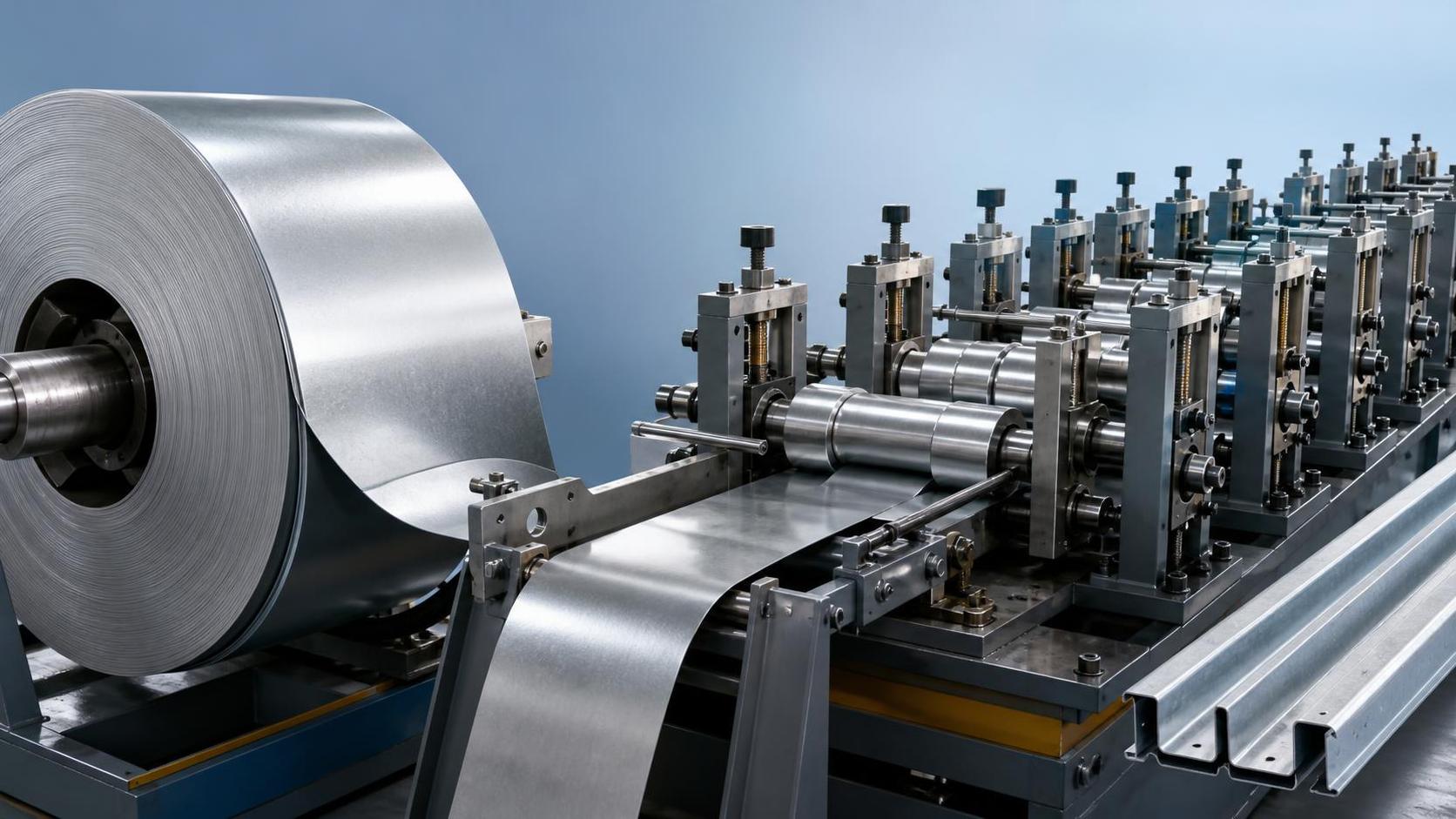
Can galvanized steel coil be roll-formed without damaging the coating? In most cases, yes. A properly designed roll-forming line can turn galvanized strip into channels, roofing profiles, studs, purlins, door frames, and many other shapes while retaining the zinc layer that protects the base steel from corrosion.
That answer comes with an important condition: the coating must be treated as part of the material, not as an afterthought. Zinc is durable, but it is not indestructible. If the strip is forced through sharp bends, misaligned rolls, contaminated tooling, or excessive forming pressure, the surface can develop scratches, scuffing, flaking, or cracks at tight corners. Those marks may seem minor when the profile leaves the machine, yet they can become corrosion starting points after installation.
For operators, the goal is not merely to produce an acceptable shape. It is to make a consistent profile without sacrificing the corrosion resistance that made galvanized steel the right choice in the first place.
What happens to the zinc coating during roll forming?
Galvanized steel is carbon steel coated with zinc, commonly through hot-dip galvanizing or continuous galvanizing. The zinc layer acts as a barrier against moisture and also provides sacrificial protection: when small areas of steel become exposed, nearby zinc can help slow rust formation.
During roll forming, the coil passes through a series of shaped roll stations. Each station gradually changes the strip geometry until the final cross-section is achieved. This gradual progression is usually more coating-friendly than trying to make the same profile in one severe press-brake operation. The strip is bent incrementally, distributing strain over several stages.
Still, zinc coatings respond differently from bare steel surfaces. At a bend, the outer face of the material stretches while the inner face compresses. If tensile strain on the outside radius becomes too high, the coating may show fine cracking. Some very light microscopic cracking can be expected in demanding bends and does not always mean the product has failed. The practical concern is whether the cracking becomes visible, widespread, or severe enough to expose substantial base metal.
Coating damage is therefore not caused by roll forming itself. It is caused by an unsuitable combination of material, profile design, tooling condition, and process control.
The short answer operators need: use a progressive, low-stress forming strategy
When a galvanized steel coil is run through the line, the safest approach is to form the section progressively and avoid making one station do too much work. A clean roll-forming design spreads the bend angle over multiple passes, controls strip movement, and keeps contact pressure only as high as necessary.
This matters especially with narrow flanges, deep channels, sharp hems, and profiles that require tight radii. A profile may look simple on a drawing but place considerable strain on the coating at one critical corner. If that corner is formed too quickly, no amount of downstream adjustment will fully undo the damage.
A useful mindset on the shop floor is this: if the rolls are “fighting” the strip, the coating is probably paying the price. Excessive noise, chatter, edge wave, skid marks, or a need to force the material through the stations are warnings that the setup deserves attention.
Five process controls that protect galvanized steel coil
1. Match the bend radius to the material and coating
The inside bend radius is one of the most influential variables. Tighter bends place greater stretch on the outside surface, where zinc cracking is most likely to appear. A larger radius generally reduces strain and improves coating retention.
There is no single radius that works for every galvanized steel coil. Appropriate geometry depends on strip thickness, steel grade, coating weight, coating type, temper, and the direction of bending relative to the rolling direction. Higher-strength steel may need more conservative forming practice because it does not yield as easily as softer grades. A heavy zinc coating can also behave differently from a lighter coating when bent.
Before full production, test the intended bend geometry with the actual material specification—not a substitute coil that merely looks similar. Small changes in grade or coating condition can produce noticeably different results.
2. Use roll tooling with smooth, properly finished contact surfaces
Even a good forming sequence can leave marks when roll surfaces are rough, worn, or contaminated. Dirt, zinc buildup, metal fragments, dried lubricant, and scoring on the rolls can all scratch the strip as it moves through the line. Because galvanized surfaces often reflect light, these marks can be particularly visible on exposed architectural or roofing components.
Rolls should have smooth transitions, clean radii, and no burrs around edges or guide points. Pay close attention to entry guides, side rolls, pinch rolls, straighteners, cut-off areas, and exit tables. Damage is not always created in the forming stations themselves; an abrasive guide or an improperly positioned support can mark every finished part.
Routine cleaning is not cosmetic housekeeping. It is a direct coating-protection measure. If surface defects begin appearing at regular intervals, inspect roll cleanliness and alignment before assuming the galvanizing is defective.
3. Control pressure instead of tightening for “security”
Over-tightened rolls are a common source of scuffing and localized coating damage. Operators may increase pressure to stop strip movement, correct a shape issue, or eliminate a perceived gap. But when the rolls clamp the material more aggressively than required, zinc can be burnished, dragged, or scraped.
The correct setting is enough pressure to guide and form the strip consistently, not enough to squeeze it unnecessarily. In a well-set line, the strip should track predictably without showing crush marks, shine streaks, or excessive friction heat.
Adjustment should be systematic. Change one relevant setting at a time, run a short sample, and inspect the result. Randomly tightening multiple stations may hide the original issue while creating a new one farther down the line.
4. Keep the strip aligned from uncoiling to cut-off
Misalignment creates side loading. Once the strip enters a station at an angle, one edge or flange can rub harder than the other, causing scratches and uneven bending. The resulting profile may also twist, bow, or show inconsistent flange height.
Check coil loading, payoff alignment, entry guide position, straightener setup, roll centerlines, and exit support. A coil that is wandering early in the process will rarely become better on its own. Operators should not use side pressure as a permanent correction for a tracking problem; that approach often trades alignment issues for coating damage.
Edge condition matters as well. A poor slit edge can carry burrs or irregularities that scrape against guides and rolls. When surface marks appear only near one edge, inspect the incoming slit quality and the strip path before changing the main forming rolls.
5. Select lubrication carefully—and do not use it to hide a tooling problem
Some roll-forming operations run galvanized material dry, while others use a light, compatible lubricant to reduce friction and improve surface appearance. The best choice depends on the profile, line speed, coating characteristics, downstream finishing, and customer cleanliness requirements.
A lubricant can reduce galling and scuffing, but it must be compatible with the zinc surface and any later painting, sealing, welding, or adhesive bonding. Excess oil may attract debris, complicate downstream operations, or create handling concerns. If lubrication suddenly becomes necessary to prevent scratching on a previously stable line, inspect the tooling condition and setup rather than simply adding more oil.
Why coating cracks sometimes appear even when the profile looks correct
A part can meet dimensional tolerances and still carry coating stress at bends. This is why visual inspection should include more than width, depth, and straightness. Look closely at outside corners, hemmed edges, and areas that contact rolls under high load.
Fine cracks may be easier to see under angled lighting or magnification. In some applications, especially where the formed part will be painted or used indoors, minor coating discontinuities may be acceptable under the relevant material and product requirements. In outdoor, humid, marine, or industrial environments, the same condition may be more significant.
The severity must be judged in context. Do not reject every faint bend-line mark automatically, but do not dismiss recurring cracking simply because the part still looks usable. Evaluate the extent of exposed steel, the service environment, the expected product life, and any applicable customer or project specifications.
Material variables that deserve attention before the coil reaches the line
Not all galvanized steel coil behaves the same way. A reliable setup starts with knowing what is being fed into the machine.
- Steel grade and yield strength: Higher-strength material often requires a more gradual forming schedule and may show greater springback.
- Strip thickness: Thicker strip may need more forming force, while thinner strip is more prone to buckling, oil canning, and marks from excessive roll pressure.
- Zinc coating designation and surface finish: Coating mass, spangle appearance, and surface treatment can influence friction and bend performance.
- Coil condition: Rust staining, storage moisture, transport damage, telescoping, edge defects, and trapped debris can all affect the finished profile.
- Rolling direction: For demanding bends, the relationship between bend direction and rolling direction can influence cracking behavior.
Operators should confirm the coil identification and incoming condition at the start of a run. Mixing coils with different grades, thicknesses, or coating specifications under one unchanged line setting is an easy way to create avoidable variation.
A practical setup routine before full-speed production
Running a short trial is usually less expensive than producing a long batch of marked or cracked sections. A sensible setup routine begins with a clean line and verified tooling. Check that rolls turn freely, guides are smooth, fasteners are secure, and no debris is trapped in the stations.
Feed a sample at a controlled speed. Inspect the first pieces after the early forming stations as well as after the final pass. Looking only at finished profiles can make it difficult to identify where the damage began. If a scratch first appears after a particular station, the investigation becomes much more focused.
Review several points on each sample: outside bend radii, edges, flats, flange tips, web surfaces, and areas near guide contact. Also check profile dimensions, twist, bow, and cut quality. Coating damage and shape problems often have a shared root cause, such as poor alignment or over-forming.
Once the line is stable, increase speed gradually. Higher production speed can change strip behavior, lubrication distribution, vibration, and heat generation. A setting that produces clean parts at low speed should be confirmed again at the intended operating rate.
Common mistakes that lead to scratched or peeled galvanizing
Trying to correct springback by over-clamping the last stations. This can produce shiny pressure lines or strip drag. A better solution may be to revise the forming progression or make a controlled adjustment earlier in the line.
Using a sharp profile design without validating bend capability. If the specified corner is too tight for the material and coating, operators are left trying to solve a design limitation at the machine.
Ignoring worn guides and support equipment. The main rolls may be in excellent condition while a damaged guide shoe creates a continuous scratch along one face of every profile.
Changing too many variables at once. When speed, roll pressure, guide position, and lubrication are all altered together, it becomes difficult to know which action improved or worsened the result.
Assuming all visible marks are harmless. Some are superficial handling marks; others are signs of coating fracture or abrasion. Inspection should distinguish between the two rather than treating every defect identically.
When a post-forming touch-up is appropriate
If isolated areas of steel are exposed by cutting, punching, handling, or minor processing damage, a compatible zinc-rich repair coating may be considered where permitted by the project specification. Touch-up should not be used as a routine substitute for correct roll forming. A profile with widespread cracking, peeling, or repeated deep scratches needs process correction, not cosmetic repair.
For parts that will be painted after forming, surface preparation and paint-system compatibility become additional considerations. The formed galvanized surface must remain clean and suitable for the next operation. Excessive lubricant, loose zinc particles, or damaged areas can reduce coating adhesion later.
The takeaway for roll-forming operators
Roll forming and galvanized steel coil are fully compatible when the process respects the coating’s limits. Use clean and smooth tooling, distribute bends gradually, avoid overly tight radii, maintain accurate alignment, and apply only the pressure required for stable forming. Check real production samples under good lighting, especially at outside bends and contact points.
The zinc coating is not just a surface finish to protect during production; it is a functional part of the finished steel product. Preserving it through the roll-forming line means fewer rejected pieces, a better appearance at installation, and more dependable corrosion resistance in service.
- Last One:No more articles
- Next Article:What makes high strength steel plate suitable for welded structures?2026-09-08
DROP A MESSAGE